
Blog
BrassSmile: What It Means and Why Teeth Look Yellow

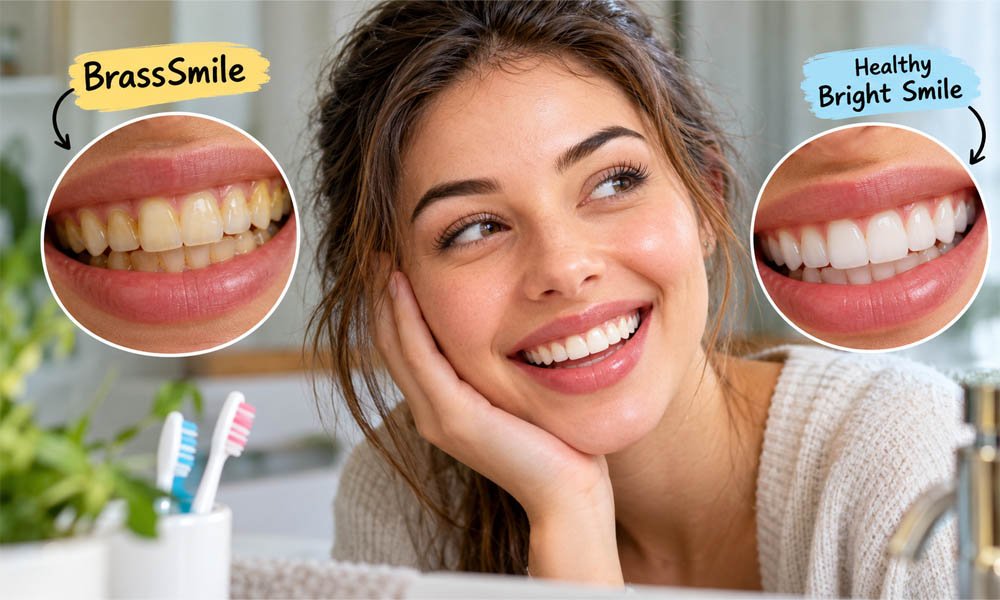
Have you ever looked in the mirror and thought your teeth seemed more yellow than before? You may brush every day, yet your smile may still look warm, dull, or less bright. This can happen for many normal reasons.
The word BrassSmile is sometimes used online for this kind of smile. It may describe teeth that look yellow, golden, warm, or uneven in color. However, BrassSmile is not an official dental disease or medical term.
In this guide, we will explain what BrassSmile means and why teeth may look yellow. We will also look at stains, enamel, dentin, braces, dental work, whitening, and other ways to improve the look of a smile.
What Does BrassSmile Mean?
BrassSmile is an informal word used online. It usually describes a smile that looks yellow, warm, dull, or slightly golden. Some people may also use the name when talking about websites, smile tools, or dental information.
A dentist would not usually tell you that you have BrassSmile. Instead, the dentist may talk about tooth stains, natural tooth color, thin enamel, plaque, damaged teeth, or old dental work. These words explain the real cause more clearly.
That difference matters. There is no single BrassSmile treatment for everyone. One person may only need a dental cleaning. Another may need whitening, bonding, or another treatment. The first step is finding out why the teeth look different.
Why Does a BrassSmile Look Yellow?
Teeth are not naturally bright white like a sheet of paper. Healthy teeth can be white, cream, ivory, or slightly yellow. Your natural tooth shade depends on the way your teeth formed and the layers inside them.
The outside layer of a tooth is called enamel. Under it is dentin. Dentin has a natural yellow tone. Enamel is partly clear, so some of the yellow color below can show through and affect the shade of your smile.
This means a BrassSmile appearance does not always mean your teeth are dirty or unhealthy. Someone can brush very well and still have naturally warm-looking teeth. Color alone cannot tell you whether a tooth is healthy.
Common Causes of BrassSmile
Many things can make teeth look warmer or darker. Coffee, tea, dark soft drinks, tobacco, and some foods can slowly stain the outside of teeth. Plaque and tartar can also make a smile look dull.
Age can change tooth color too. Over time, enamel may become thinner. This allows more of the yellow dentin below to show. Tooth grinding, acid from food and drinks, and normal wear may also change how enamel looks.
Other causes include braces, old fillings, crowns, tooth injuries, and changes that happened while teeth were growing. This is why it is better to find the cause instead of buying a whitening product right away.
BrassSmile and Surface Stains
Surface stains sit on the outside of teeth. They are often called outside stains. Coffee and tea are common causes. Tobacco, red wine, dark sauces, and strongly colored drinks can also leave marks over time.
These stains may be easier to see near the gumline or between crowded teeth. They can also collect in places that are harder to brush. A person may notice the smile slowly becoming darker even when there is no pain.
A professional dental cleaning can remove plaque, tartar, and some surface stains. After cleaning, the natural tooth shade becomes easier to see. If the teeth are healthy, whitening may then be considered for stains that remain.
BrassSmile, Enamel, and Natural Dentin
Enamel is the hard outer layer that protects your teeth. It looks light, but it is not fully solid in color. The dentin below it helps create the final shade that you see when you smile.
Dentin is naturally warmer and more yellow. If enamel is thin, more dentin may show through. This can create a BrassSmile look even when the tooth surface is clean. It is often a normal part of natural tooth color.
Acidic drinks, tooth grinding, age, and wear can slowly make enamel thinner. Whitening may change some tooth color, but it cannot grow lost enamel back. If teeth are very sensitive or worn, a dentist should check them first.
BrassSmile Around Braces and Aligners
Braces can make brushing more difficult because food and plaque may collect around brackets and wires. Tea, coffee, and other dark drinks may also leave stains in areas that are hard to clean.
When braces are removed, some people notice that parts of the teeth look lighter or darker than other areas. This does not always mean the braces damaged the teeth. Plaque, stains, or enamel changes may have caused the uneven look.
Clear aligners also need good care. Drinking colored or sugary drinks while wearing trays can trap liquid against the teeth. Aligners can move teeth into better positions, but they do not whiten enamel or remove stains.
BrassSmile With Fillings, Crowns, and Veneers
Fillings, crowns, veneers, and bonding can make tooth color more complex. These materials may match your teeth when first placed, but natural teeth can change color over time while dental work may stay close to its old shade.
Whitening can also create a difference. Natural teeth may become lighter, while a crown or filling stays the same color. This can make dental work look darker even when nothing is wrong with the restoration itself.
A dentist may suggest polishing, repairing, or replacing visible dental work if the shade no longer matches. If whitening is planned, it is often better to whiten natural teeth first and then match new dental work to the final shade.
Can One Dark Tooth Be BrassSmile?
A BrassSmile look usually affects several teeth, but sometimes only one tooth becomes darker. This is different from normal surface staining. A single gray, brown, or dark tooth may need closer attention.
An old injury can change the color inside a tooth. Decay, a large filling, or past root treatment may also make one tooth look different. Even an injury from years ago can sometimes cause a color change later.
If one tooth suddenly becomes darker, do not keep using whitening products on it. A dentist should first find the cause. Treatment may include internal whitening, bonding, a veneer, a crown, or care for decay.
BrassSmile Treatment Options
There is no single treatment for BrassSmile. The right choice depends on why the smile looks yellow, dull, or uneven. A good treatment plan starts with the cause, not with the most expensive option.
Professional cleaning may be enough when plaque, tartar, or surface stains are the main problem. Cleaning removes buildup and shows the real tooth color underneath. Some people find that their smile already looks much brighter afterward.
Other people may need whitening, bonding, veneers, crowns, braces, or clear aligners. These treatments solve different problems. A dentist can help choose the least invasive option that gives a natural result while keeping healthy teeth safe.
Can Teeth Whitening Fix BrassSmile?
Whitening can help some BrassSmile concerns, mainly when natural teeth have general yellow or dark staining. Coffee, tea, age, and some other stains may become lighter with the right whitening method.
However, whitening cannot solve every problem. It will not remove tartar, fix cavities, rebuild lost enamel, repair chips, or straighten crowded teeth. It also will not change the shade of crowns, fillings, veneers, or bonding.
Some people notice temporary sensitivity or sore gums during whitening. Using more product does not always mean better results. If teeth are painful, very sensitive, or uneven in color, get them checked before starting whitening.
BrassSmile AI Tools and Online Safety
In 2026, AI smile tools are becoming easier to find online. These tools may look at a smile photo and point out visible details such as tooth shade, gaps, tooth position, gum display, or uneven edges.
This can be useful when you are trying to understand what bothers you about your smile. For example, you may think the main issue is color, while a photo tool may show that shadows from crowded teeth also affect the look.
Still, AI cannot see everything. A normal photo cannot show hidden decay, tooth roots, bone loss, deep gum problems, or infection. AI smile tools should be used for learning, not as a replacement for a dental exam.
Online safety also matters. Before uploading a face or smile photo, check who owns the website. Read its privacy rules. Find out how photos are stored, used, shared, and deleted. Similar BrassSmile website names may belong to different groups.
How to Care for a BrassSmile Every Day
Simple daily care can make a big difference. Brush your teeth twice a day with fluoride toothpaste. Use a soft toothbrush. Clean between your teeth with floss or another tool your dentist recommends.
If you have braces, take extra time around brackets and wires. If you use clear aligners, remove them before eating. Water is usually the safest drink while trays are in your mouth.
Coffee, tea, tobacco, and dark drinks can add surface stains. Rinsing with water afterward may help. Try not to sip sugary or acidic drinks all day because long contact with teeth can increase wear and decay risk.
Avoid harsh home whitening ideas. Lemon juice, vinegar, strong powders, and hard scrubbing can damage enamel. They may even expose more yellow dentin, making the BrassSmile look stronger instead of better.
When Should You See a Dentist?
Not every yellow smile needs treatment. Natural cream or yellow shades can be healthy. However, some changes should be checked because tooth color can sometimes give clues about a deeper problem.
See a dentist if one tooth becomes dark, especially after an injury. You should also get help if discoloration comes with pain, swelling, bleeding gums, strong sensitivity, a bad taste, or a cracked or damaged tooth.
A dental visit is also helpful before whitening if you have crowns, veneers, large fillings, gum recession, weak enamel, or sensitive teeth. These things can affect both safety and the final color.
Think of it this way. If your whole smile slowly becomes darker after years of coffee, cleaning or whitening may help. If one tooth changes color quickly and hurts, that is a very different problem.
Conclusion
BrassSmile is best understood as a simple description of how a smile looks. It is not one dental disease. Teeth may appear yellow, golden, warm, dull, or uneven for many different reasons.
Natural dentin, thin enamel, surface stains, plaque, braces, old dental work, tooth injuries, and other changes can all affect color. That is why one BrassSmile treatment cannot work for every person.
The safest approach is to find the cause first. Start with good daily care and a dental check when needed. Cleaning or whitening may be enough for simple stains, while other problems may need bonding, orthodontic care, or dental repair.
Most of all, remember that healthy teeth do not have to look paper-white. A clean, healthy, natural smile can have many shades. The goal should not be the brightest smile possible. It should be a healthy smile that looks right for you.
(FAQs)
What does BrassSmile mean?
BrassSmile is an informal word used online for a smile that looks yellow, warm, dull, golden, or uneven in color. It is not a formal dental diagnosis. A dentist will usually look for the real cause behind the color change.
Why do my teeth look yellow even when I brush every day?
Brushing removes plaque and food, but it cannot change your natural dentin color. Dentin has a yellow tone and sits under enamel. Thin enamel, age, stains, and old dental work can also make teeth look warmer.
Is BrassSmile a sign of bad dental health?
Not always. Healthy teeth can naturally look cream, ivory, or slightly yellow. The color alone does not tell you if a tooth is healthy. Pain, swelling, cracks, bleeding gums, or sudden color changes are more important warning signs.
Can teeth whitening fix BrassSmile?
Whitening may help if the problem comes from stains or general tooth discoloration. It will not fix cavities, enamel loss, crooked teeth, chips, tartar, or damaged teeth. It also cannot change the color of crowns, fillings, or veneers.
Why does one tooth look darker than the others?
One dark tooth may be linked to an old injury, decay, a large filling, root treatment, or changes inside the tooth. This is different from normal staining. A dentist should check a tooth that becomes dark suddenly.
Can coffee and tea cause a BrassSmile look?
Yes. Coffee, tea, dark soft drinks, red wine, tobacco, and some foods can leave stains on the outer tooth surface. These stains may build slowly over time. Cleaning and whitening may help when the teeth are otherwise healthy.
Do braces or clear aligners cause yellow teeth?
Braces do not directly make teeth yellow, but plaque and stains can collect around brackets if cleaning is difficult. Clear aligners can also trap colored or sugary drinks against teeth. Good cleaning is very important during treatment.
Can crowns, fillings, or veneers make my smile look uneven?
Yes. Natural teeth can change color over time, while crowns, veneers, fillings, and bonding may stay close to their old shade. Whitening can make this difference more clear because dental work does not whiten like natural enamel.
Are AI smile tools useful for BrassSmile?
AI smile tools may help show visible things like tooth shade, gaps, tooth position, and smile balance. However, they cannot find every dental problem. They cannot replace a real dental exam, X-rays, or advice from a dentist.
When should I see a dentist about BrassSmile?
See a dentist if one tooth suddenly becomes darker, or if color changes come with pain, swelling, sensitivity, bleeding gums, bad taste, cracks, or damaged dental work. It is also smart to get checked before starting whitening.
Continue reading: FintechZoom.io Nasdaq: What Investors Should Know Before Using It

Emelia Hartford Net Worth: Inside Her Income, Cars, and Success Story

And Diligence: The Hidden Meaning and Why People Are Curious

Naomi Burton-Crews: The Heartwarming Story of Terry Crews’ Eldest Child

Ashanti Net Worth: Her Biggest Hits, Business Ventures, and Fortune

Who Is Daena E. Title? The Untold Story of Jason Alexander’s Wife

Gina Kimmel: What Happened to Jimmy Kimmel’s First Wife?

Sanne Hamers: Everything to Know About Wyatt Russell’s Former Wife

Matt Rife Net Worth: How Much Money Does the Viral Comedian Make?

Clix Net Worth: How Cody Conrod Turned Gaming Into a Million Dollar Career

What You Should Know Before Adding a Private Well to Your Florida Property

Arbello Barroso: Where Is Luciana Barroso’s Ex-Husband Now?

Suzanne Bukinik: Everything to Know About Brad Falchuk’s Ex-Wife

Maria Jesus Pariente: What We Know About Enzo Maresca’s Wife

Who Is Astrid Menks? All About Warren Buffett’s Wife

Who Is April Dubois? All About Wesley Snipes’ Ex-Wife

Berkin Gökbudak: What to Know About Aslı Enver’s Husband

Who Is Kate Connelly? All About Bobby Flay’s Ex-Wife

Erika Riker: Where Is Randy Jackson’s Ex-Wife Now?

Andrea Sarubbi: Who Is Luke Kirby’s Wife and What Does She Do?

Patricia Rahman: The Full Story of James Marsters’ Ex-Wife
Emelia Hartford Net Worth: Inside Her Income, Cars, and Success Story
And Diligence: The Hidden Meaning and Why People Are Curious
Naomi Burton-Crews: The Heartwarming Story of Terry Crews’ Eldest Child
Ashanti Net Worth: Her Biggest Hits, Business Ventures, and Fortune
Who Is Daena E. Title? The Untold Story of Jason Alexander’s Wife
Gina Kimmel: What Happened to Jimmy Kimmel’s First Wife?
Sanne Hamers: Everything to Know About Wyatt Russell’s Former Wife
Matt Rife Net Worth: How Much Money Does the Viral Comedian Make?
Clix Net Worth: How Cody Conrod Turned Gaming Into a Million Dollar Career
What You Should Know Before Adding a Private Well to Your Florida Property
-

 News1 month ago
Who Is Gigi Yallouz? Meet Owain Yeoman’s Wife and Jewelry Designer
-

 News2 months ago
Rajesh Nihalani: What We Know About Archie Panjabi’s Husband
-

 News2 months ago
Stephan Farmiga: Everything to Know About Vera Farmiga’s Brother
-

 News2 months ago
Tara Nadella: What We Know About Satya Nadella’s Daughter