
Blog
AICOT: What It Is, How It Works, and Why It Matters

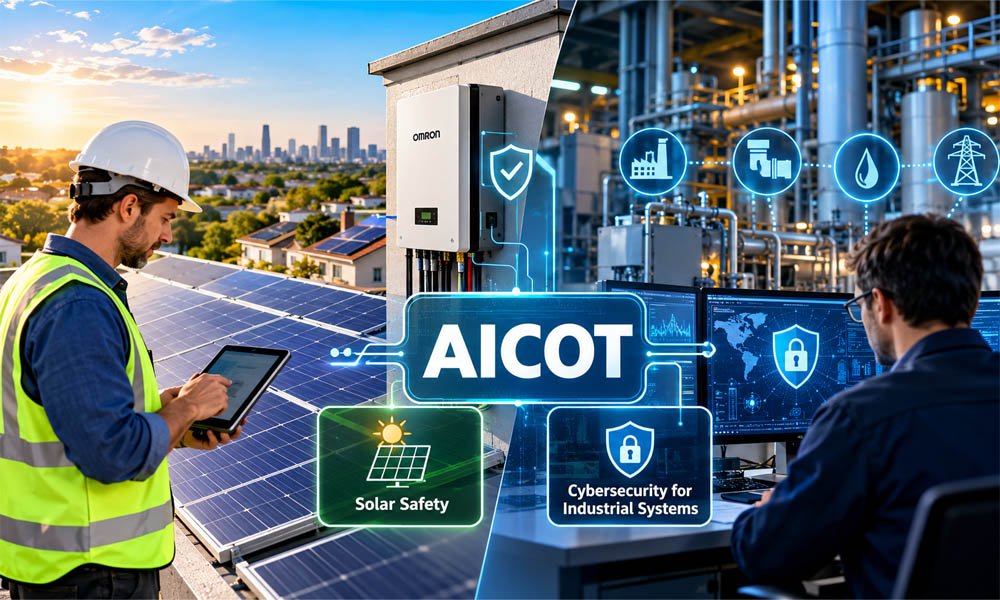
AICOT may look like one simple tech name. Yet it can mean two very different things. One meaning is linked to solar power safety. The other is linked to AI and cyber safety for large industrial systems.
This can make online searches confusing. You may find a page about solar inverters, then another page about cyberattacks on factories. Both can talk about AICOT, but they are not talking about the same technology.
In this guide, we will make everything clear. We will first explore OMRON’s solar AICOT technology. Then we will look at the European AICOT cyber project. We will explain how they work, their uses, history, benefits, and limits.
What Is AICOT?
AICOT has two important meanings. In solar power, AICOT stands for Anti-Islanding Control Technology. OMRON developed this technology for solar power conditioners, also called solar inverters. Its main job is to support safer grid-connected solar systems.
There is also a European project called AICOT. This project focuses on using artificial intelligence to help protect Operational Technology, or OT. OT includes computer systems that control factories, power networks, water plants, and other important services.
These two uses should not be mixed together. OMRON AICOT deals with solar power and grid safety. The European AICOT project deals with cyber safety. Knowing this difference makes the rest of the topic much easier to understand.
AICOT Anti-Islanding Technology Explained
OMRON’s AICOT was made for grid-connected solar power systems. Solar panels produce DC electricity. A solar inverter changes this power into AC electricity, which homes and the normal power grid can use.
A grid-connected inverter also needs to know if utility power is working. If the main grid goes down, the solar system should not keep sending power into a part of the grid that has become separated.
This is where AICOT helps. It gives compatible power conditioners a way to detect this problem. AICOT is not a solar panel or a separate box that people normally buy. It is control technology built into compatible equipment.
Why AICOT Is Important for Solar Safety
To understand AICOT, we first need to understand islanding. Imagine a sunny afternoon. A neighborhood loses utility power, but many rooftop solar panels are still producing electricity. Some local wires could stay powered by those solar systems.
This is called unplanned or unintentional islanding. It can create a serious safety risk. A utility worker may think a disconnected power line is no longer live. Yet electricity from nearby solar systems could still be reaching that line.
Grid-connected solar inverters therefore need anti-islanding protection. They must notice when normal utility power disappears and respond correctly. AICOT was designed to make this detection work well, especially when many solar systems are connected in one area.
How Does AICOT Work?
AICOT uses an active way to check the electricity grid. One important part of this process is frequency. The normal utility grid helps keep electrical frequency stable. An inverter can watch this behavior for signs of change.
AICOT also uses small, controlled changes in reactive power. In simple words, the inverter makes a tiny electrical change and watches what happens next. The response can help show whether the main utility grid is still connected.
If the response shows that utility power may be gone, the anti-islanding system can act. The solar inverter can stop feeding the separated grid area. This helps keep the electrical network safer during an outage.
AICOT and Multiple Solar Inverters
Anti-islanding becomes harder when many solar inverters are working close together. Older active systems may each make small electrical changes to test the grid. When many units do this at once, their actions can affect each other.
Think of several people talking at the same time. It becomes harder to hear one voice clearly. A similar problem can happen with active anti-islanding methods. Signals from different inverters may weaken or interfere with each other.
AICOT was developed with this problem in mind. Its control method was designed for places with many nearby photovoltaic systems. This made it useful for housing areas and other locations where rooftop solar became common.
History and Development of AICOT
OMRON’s work on this technology grew as residential solar use increased in Japan. Research into connecting many photovoltaic systems in the same area reportedly began around 2003. The work included testing linked with Ota, Japan.
OMRON reported successful development of its multi-unit anti-islanding control technology in 2008. Engineers did not stop with small lab tests. They also studied how the system worked when large numbers of solar power conditioners operated together.
Commercial OMRON photovoltaic power conditioners using the technology reportedly went on sale in July 2011. The technology later gained industry attention. OMRON also announced the standardization of its multi-unit anti-islanding technology in 2015.
AICOT Testing and Real-World Solar Projects
One important test took place at Pal Town Josai-no-Mori in Ota, Gunma Prefecture, Japan. This site gave engineers a chance to study many connected solar systems instead of testing only one or two inverters.
By December 2009, the project reportedly had 554 equipped units. Their combined solar power capacity was about 2,129 kW. This large setup helped researchers study how anti-islanding controls behaved when hundreds of solar systems worked in the same area.
This testing also showed why AICOT could be useful for large solar projects. OMRON reported that older multi-unit interference testing could take one or two months. AICOT-equipped systems were designed to reduce this extra testing in supported installations.
Main Benefits and Limits of AICOT
AICOT was made to help solar systems work safely when many inverters are close together. One main benefit is less interference between nearby power conditioners. This can make anti-islanding checks easier in areas with lots of rooftop solar.
The technology may also reduce some testing work. This can save time when many supported solar systems are connected to one local grid. It can be useful for housing areas, solar communities, and sites with several solar systems.
Still, AICOT has limits. It does not work with every solar inverter. Solar rules have also changed over time. Modern systems may need many other safety features. Local grid rules and current safety standards must always be followed.
What Is the European AICOT Cybersecurity Project?
There is another AICOT that has nothing to do with OMRON’s solar technology. This AICOT is a European cyber defense project. It focuses on Operational Technology, often called OT, used in important industrial systems.
OT controls real machines and physical work. It can include pumps in water plants, machines in factories, and control systems in energy networks. A cyberattack on these systems could cause much more than lost computer files.
The project aims to use AI to help find cyber threats earlier. As of 2026, it is better viewed as a developing project, not a proven product that every company can simply buy and install.
How AICOT Uses AI for Cybersecurity
The European AICOT project plans to use machine learning to study normal activity. A system can learn how machines usually talk to each other. It can then look for actions that seem strange or happen at unusual times.
Imagine a factory machine that normally receives the same commands each morning. One night, it suddenly gets a rare command from another device. AICOT could help flag this change so a security worker can check what happened.
An unusual event does not always mean an attack. Repairs and normal changes can also create strange activity. For this reason, people still matter. AI can help find warning signs, while trained workers can decide what action is safe.
AICOT, OT Protocols, and Threat Sharing
Industrial machines use special ways to send information. These are called protocols. Examples include Modbus, DNP3, PROFINET, IEC 61850, BACnet, and OPC UA. Normal computer security tools may not fully understand these industrial messages.
Protocol-aware security can look deeper. It can check who sent a command, which machine received it, and what that command may do. This gives security teams more useful information than a simple warning about unusual network traffic.
AICOT also explores secure Cyber Threat Intelligence sharing. This could help groups share useful details about new threats. The project also looks at privacy-focused and blockchain-supported methods, but public details about how every part will work remain limited.
AICOT Solar vs AICOT Cybersecurity
The two meanings of AICOT are easy to mix up, but their jobs are very different. OMRON’s AICOT is about solar power safety. The European AICOT project is about protecting industrial computer and control systems from cyber threats.
Solar AICOT watches electrical grid behavior. It helps an inverter notice when normal utility power is gone. Cybersecurity AICOT looks at industrial data, network activity, machine behavior, and possible signs of a digital attack.
There is also a big difference in their history. OMRON’s technology has been used in solar power equipment. The European project is still moving through development and testing. Its planned features should not be treated as proven results.
| Area | Solar AICOT | Cybersecurity AICOT |
|---|---|---|
| Main focus | Solar safety | Cyber safety |
| Main use | Anti-islanding | OT protection |
| Linked group | OMRON | European project |
| Key technology | Grid control | AI and machine learning |
| Main setting | Solar systems | Critical infrastructure |
Why AICOT Matters in 2026 and Beyond
Solar power continues to play a growing role in modern energy systems. More homes and businesses can produce their own electricity. This makes safe control between local solar equipment and the wider power grid very important.
At the same time, factories and public services are becoming more connected. Water systems, energy sites, and production lines now depend on digital tools. More connections can bring better control, but they can also create new ways for cyber threats to enter.
Both meanings of AICOT show the same wider lesson. New technology needs strong safety systems around it. Whether we are talking about solar electricity or industrial AI, smart systems must also be safe, tested, and carefully managed.
Conclusion
AICOT can mean two very different things. OMRON’s AICOT is Anti-Islanding Control Technology. It was created to improve solar grid safety, especially where many photovoltaic systems operate close to each other.
The European AICOT project has a different goal. It explores how AI, machine learning, industrial protocol checks, and threat information can help protect important OT systems from cyber risks.
Both technologies deal with problems created by a more connected world. One helps make connected solar power safer. The other aims to make connected industrial systems more secure. Knowing this difference makes AICOT much easier to understand.
(FAQs)
What does AICOT mean?
In OMRON solar systems, AICOT means Anti-Islanding Control Technology. A separate European cybersecurity project also uses the AICOT name.
Who developed AICOT?
OMRON developed the solar anti-islanding technology. The other AICOT is a European project focused on AI-based cyber defense for industrial OT systems.
Is AICOT a solar inverter?
No. Solar AICOT is control technology used inside compatible photovoltaic power conditioners or inverters. It is not a solar panel or separate home device.
How does solar AICOT help during an outage?
It watches grid behavior and helps detect when normal utility power disappears. The inverter can then stop feeding electricity into an isolated grid section.
What does cybersecurity AICOT protect?
It is aimed at OT environments. These can include energy networks, water plants, factories, transport systems, and other important industrial sites.
Is European AICOT available to buy?
Public information describes it as a project moving through development and realistic testing. It should not yet be treated as a widely proven commercial security product.
Continue reading: Pertadad: How It Connects Work, Life, and Technology

Kali Uchis Net Worth: How the Grammy Winner Built Her Fortune

Lauren Alaina Net Worth: Her Salary, Career, and Biggest Income Sources

Azzi Fudd Net Worth: Career, Salary, Sponsorships, and Financial Growth

Ali Siddiq Net Worth: The Story Behind His Money, Fame, and Comedy Career

Chrissy Teigen Net Worth: Modeling Career, Business, Income, and Success Story

Lil Dicky Net Worth: Career, Earnings, House, and Amazing Success

NJuelz Santana Net Worth: How the Rap Star Built His Money and Fame

CJ So Cool Net Worth: His Earnings, Family, and Life Today

Cameron Diaz Net Worth: Movies, Salary, Homes, and More

Innovations in Floristry: BOPP Matte Film as the Go-To Material for Modern Flower Packaging

Arbello Barroso: Where Is Luciana Barroso’s Ex-Husband Now?

Suzanne Bukinik: Everything to Know About Brad Falchuk’s Ex-Wife

Maria Jesus Pariente: What We Know About Enzo Maresca’s Wife

Who Is Astrid Menks? All About Warren Buffett’s Wife

Who Is April Dubois? All About Wesley Snipes’ Ex-Wife

Berkin Gökbudak: What to Know About Aslı Enver’s Husband

Who Is Kate Connelly? All About Bobby Flay’s Ex-Wife

Erika Riker: Where Is Randy Jackson’s Ex-Wife Now?

Patricia Rahman: The Full Story of James Marsters’ Ex-Wife

Andrea Sarubbi: Who Is Luke Kirby’s Wife and What Does She Do?
Kali Uchis Net Worth: How the Grammy Winner Built Her Fortune
Lauren Alaina Net Worth: Her Salary, Career, and Biggest Income Sources
Azzi Fudd Net Worth: Career, Salary, Sponsorships, and Financial Growth
Ali Siddiq Net Worth: The Story Behind His Money, Fame, and Comedy Career
Chrissy Teigen Net Worth: Modeling Career, Business, Income, and Success Story
Lil Dicky Net Worth: Career, Earnings, House, and Amazing Success
NJuelz Santana Net Worth: How the Rap Star Built His Money and Fame
CJ So Cool Net Worth: His Earnings, Family, and Life Today
Cameron Diaz Net Worth: Movies, Salary, Homes, and More
Innovations in Floristry: BOPP Matte Film as the Go-To Material for Modern Flower Packaging
-

 News1 month ago
Who Is Gigi Yallouz? Meet Owain Yeoman’s Wife and Jewelry Designer
-

 News2 months ago
Rajesh Nihalani: What We Know About Archie Panjabi’s Husband
-

 News2 months ago
Stephan Farmiga: Everything to Know About Vera Farmiga’s Brother
-

 News2 months ago
Tara Nadella: What We Know About Satya Nadella’s Daughter