
Blog
Hrmtaila: A Beginner’s Guide to Smarter HR and Workforce Management

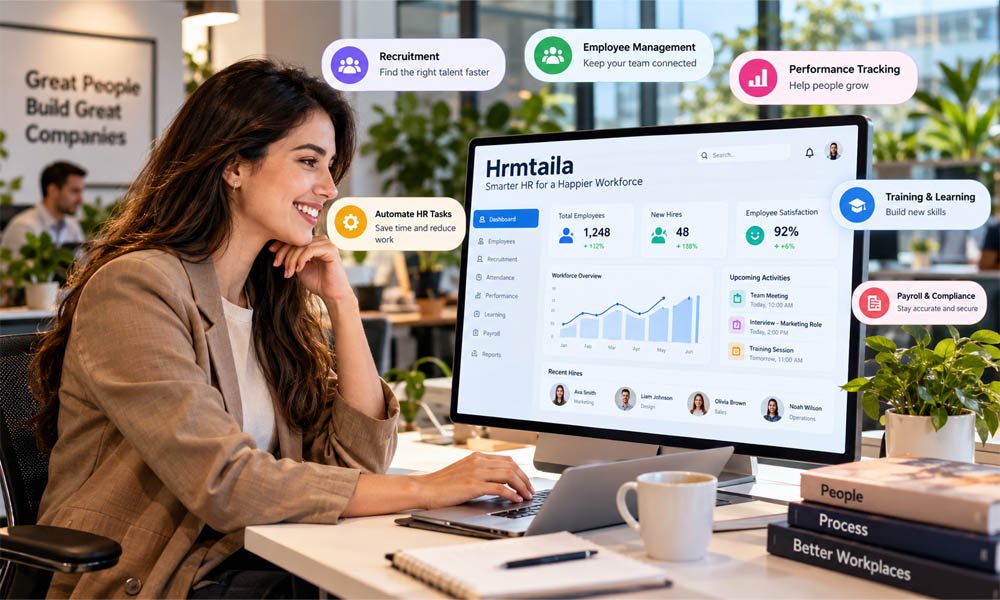
Human Resources has changed a lot in recent years. HR teams no longer use only paper files and simple spreadsheets. In 2026, many workplaces use cloud tools, automation, and AI to make daily HR work easier.
This is where Hrmtaila becomes interesting. The term is linked online with smarter Human Resource Management. It brings together ideas such as AI, HR automation, employee data, cloud software, hiring support, and workforce planning.
Still, there is an important point to know. Hrmtaila is not clearly proven to be one established software platform. In this guide, we will explain what the term means, how it may fit into modern HR, and where AI can help.
What Is Hrmtaila?
Hrmtaila is best understood as an emerging term connected with AI-assisted Human Resource Management. In simple words, it describes the idea of using smart digital tools to help HR teams manage people and common workplace tasks.
The idea may include AI, automation, cloud-based HR tools, and workforce data. These tools can support hiring, onboarding, employee records, payroll work, staff questions, performance reviews, training, and workforce planning.
The term itself is still unclear. There is no widely accepted meaning from a known creator or industry group. So, it is safer to see Hrmtaila as a developing HR technology idea instead of giving it a fixed meaning.
Is Hrmtaila a Real HR Software Platform?
At this time, there is not enough clear public proof to describe Hrmtaila as a known commercial HR software platform. A real product normally has an official company, clear product pages, pricing, support details, privacy rules, and verified users.
Those details have not been clearly established for Hrmtaila. Some websites may describe it as if it is a complete AI HR platform. However, repeating a claim online does not make that claim a confirmed fact.
This does not mean the idea behind Hrmtaila is false. AI-powered HR tools are very real. The key difference is simple. We can explain what modern AI HR systems can do without claiming that one unverified Hrmtaila product offers every feature.
How Hrmtaila Connects AI With HR
Traditional HR software is good at storing information. It can hold employee names, job details, leave records, pay information, benefits, and other important files. Modern AI tools can add another useful layer.
AI can sort information, find patterns, answer simple questions, create short summaries, and help people complete repeated tasks. Automation can also move approved information from one workplace system to another without someone entering the same details again.
Think about an HR worker who receives many simple questions each day. An AI assistant could answer common questions about holidays or company rules. The HR worker would then have more time for problems that need care and human judgment.
How Hrmtaila Could Help With Hiring
Hiring can take a lot of time. A popular job may receive hundreds of applications. Recruiters have to read CVs, check skills, arrange interviews, send updates, and keep track of each person during the hiring process.
A Hrmtaila-style system could help organize this work. AI may compare skills with job needs, sort applications, help prepare job posts, schedule interviews, and remind recruiters about tasks that still need to be completed.
But AI should not have the final word. A person may have useful skills that are not clear from a CV. Some people also have unusual career paths. Human recruiters should review important choices before accepting or rejecting someone.
Hrmtaila and Employee Onboarding
Getting a new job can feel exciting, but the first few days can also be confusing. New workers may need to complete forms, read company rules, receive equipment, join training, and learn how workplace systems work.
Hrmtaila could describe an automated approach that makes these steps easier. A digital system may send forms, create task lists, remind managers about meetings, and show new workers what they need to complete next.
AI assistants may also answer simple questions. A new worker could ask where to find a leave form or when payday happens. More personal matters should still go directly to a real HR worker who can understand the full situation.
Hrmtaila for Payroll, Leave, and HR Records
Payroll depends on many details. Working hours, overtime, leave, salary, tax information, and other records must be correct. A small mistake can cause a worker to receive the wrong amount of money.
Automation can help move approved information between HR and payroll systems. It may also spot missing fields or unusual numbers before payroll is completed. This can save time and help HR teams find simple errors earlier.
Still, payroll should not run without proper checks. Tax rules, contracts, benefits, and special cases can be different for each worker. Hrmtaila should support trained people, while the final review and approval remain with responsible staff.
Hrmtaila and Employee Performance
Employee performance is about more than numbers. Managers may look at goals, completed work, feedback, skills, training, teamwork, and progress. AI can help organize this information so it is easier to review.
For example, a smart HR system may notice that a worker needs training in one skill. It could suggest a course or show the manager where extra support may help. This can make employee development more focused.
However, an AI score cannot tell the whole story. It may miss teamwork, personal challenges, or difficult projects. Promotions, warnings, and other major decisions should include real talks, clear facts, and careful human judgment.
Hrmtaila and Workforce Analytics
Workforce analytics means using staff data to understand what is happening at work. A company may look at hiring time, staff turnover, attendance, skills, labor costs, and training. These numbers can help HR teams see where support is needed.
A Hrmtaila-style approach could use AI to find useful patterns in this data. For example, it may show that one team has more workers leaving than other teams. HR can then look deeper and try to understand why.
AI may also help with future planning. It could show possible skill gaps or future hiring needs. Still, these results are only signals. AI cannot see the future. People must review the data before making important plans.
Main Benefits of Hrmtaila for Businesses
One possible benefit of Hrmtaila is saving time. HR teams often spend many hours doing repeated work. Automation may help with forms, interview times, staff questions, records, reminders, and other simple daily jobs.
Another benefit is better use of information. A connected system can make it easier to find the right records. HR teams may spend less time moving data between different files and more time helping workers and managers.
Businesses should still measure the results. They can check hiring time, payroll errors, support response time, onboarding progress, and hours saved. Adding AI sounds modern, but the real question is simple: Did it actually make HR better?
Hrmtaila Privacy, Security, and AI Risks
HR teams hold very private information. This can include names, addresses, pay details, job applications, attendance, performance notes, and other employee records. Any system using this data needs strong safety rules.
A Hrmtaila approach should limit who can see private records. Businesses should also know where data is stored, why it is collected, and how long it stays there. Workers should not lose control of private information simply because AI is being used.
Bias is another risk. AI may learn from old data that contains unfair patterns. This can affect hiring or other work choices. Businesses should test AI tools often and make sure a real person can question or change a poor result.
How to Use Hrmtaila Responsibly
A simple way to use AI in HR is to follow four steps: assist, review, decide, and audit. First, AI helps with a task. It may sort information, find a pattern, or suggest an action.
Next, a trained person reviews the result. That person checks the facts and looks for missing details. An approved manager or HR worker then makes the final choice, especially when the choice affects someone’s job or pay.
The last step is checking the system over time. Businesses should look for mistakes, complaints, unfair results, and cases where workers changed an AI suggestion. If the tool causes problems, there should be a clear way to pause it.
How to Choose a Hrmtaila-Style HR Solution
Start with the problem, not the AI. Maybe hiring takes too long. Perhaps new workers struggle with onboarding. Or the HR team spends hours answering the same simple questions every week.
Next, check the company behind the actual tool. Look for clear product details, privacy rules, security information, support options, and real contact details. Ask what employee data the tool needs and what happens to that data later.
A small test can be safer than changing everything at once. Try the tool with one simple HR task. Measure the results and ask workers for feedback. If it works well and stays safe, the company can slowly use it for more tasks.
Future of Hrmtaila and Smarter HR
In 2026, AI is becoming a bigger part of workplace technology. Future HR tools may connect hiring, onboarding, learning, payroll support, staff questions, and workforce planning in smoother ways.
AI agents may also handle several simple steps together. For example, a system could collect onboarding forms, send a training reminder, update an approved record, and tell the manager when everything is ready.
The future of the word Hrmtaila itself is less clear. It may become a known HR term or become linked with a real product. It may also fade away while the technology behind the idea continues under other names.
Conclusion
Hrmtaila is best understood today as an emerging idea linked with AI-assisted Human Resource Management. There is not enough clear proof to treat it as a well-known commercial HR platform with a confirmed list of features.
Still, the ideas connected with Hrmtaila are useful. AI and automation can help with hiring, onboarding, payroll support, employee records, performance, workforce data, and common HR questions. These tools can save time when they are used carefully.
The human side must always stay important. Jobs, pay, privacy, and careers affect real people. Smart HR is not about letting computers control every choice. It is about using technology to help people make clearer, safer, and better decisions.
(FAQs)
What is Hrmtaila?
Hrmtaila is an emerging term linked with AI-assisted Human Resource Management. It describes the use of AI, automation, cloud tools, and workforce data to make common HR tasks easier. It is better viewed as a developing idea than a confirmed software platform.
What does Hrmtaila mean?
There is no official meaning for the full word Hrmtaila. The first letters, “HRM,” may relate to Human Resource Management. However, the origin of the remaining letters is not clearly known. This is why the term should be explained with care.
Is Hrmtaila a real HR software platform?
There is not enough clear public information to confirm Hrmtaila as an established commercial HR platform. A verified product would normally have an official developer, product pages, pricing, support, privacy rules, and clear features. These details remain unclear for Hrmtaila.
How could Hrmtaila be used in HR?
A Hrmtaila-style system could help with hiring, onboarding, employee support, payroll checks, leave records, training, and workforce planning. AI could handle simple repeated work while HR staff focus on tasks that need human care and judgment.
Can Hrmtaila help with recruitment?
The idea can include AI-supported recruitment. AI may sort job applications, compare skills with job needs, schedule interviews, and send simple updates. However, recruiters should review the results and remain responsible for final hiring choices.
Can Hrmtaila replace HR workers?
No. AI can help with repeated tasks and large amounts of data, but HR work also needs human judgment. Employee problems, hiring choices, workplace conflicts, promotions, and other sensitive matters often need real conversations and careful human decisions.
Is Hrmtaila safe for employee data?
There is not enough verified information about a specific Hrmtaila product to say that it is safe. Any HR tool should have strong security, limited access, clear privacy rules, safe data storage, and controls over how employee information is used.
What are the main benefits of Hrmtaila?
Possible benefits include saving time, reducing repeated work, giving workers faster answers, improving onboarding, and making workforce data easier to study. These benefits depend on the actual tools used, good data, proper setup, and regular human checks.
What are the risks of using Hrmtaila?
Possible risks include incorrect AI answers, weak data security, privacy problems, and unfair AI results. Automation may also make poor HR processes faster instead of better. Businesses should test tools carefully and allow people to review important decisions.
What is the future of Hrmtaila?
The future of Hrmtaila is still unclear. The term could become linked with a real HR product or grow into a wider technology idea. Even if the name disappears, AI, automation, and workforce analytics will likely remain important parts of modern HR.
Continue reading: Infusion360: How This IV Drug App Helps Nurses and Paramedics

Kali Uchis Net Worth: How the Grammy Winner Built Her Fortune

Lauren Alaina Net Worth: Her Salary, Career, and Biggest Income Sources

Azzi Fudd Net Worth: Career, Salary, Sponsorships, and Financial Growth

Ali Siddiq Net Worth: The Story Behind His Money, Fame, and Comedy Career

Chrissy Teigen Net Worth: Modeling Career, Business, Income, and Success Story

Lil Dicky Net Worth: Career, Earnings, House, and Amazing Success

NJuelz Santana Net Worth: How the Rap Star Built His Money and Fame

CJ So Cool Net Worth: His Earnings, Family, and Life Today

Cameron Diaz Net Worth: Movies, Salary, Homes, and More

Innovations in Floristry: BOPP Matte Film as the Go-To Material for Modern Flower Packaging

Arbello Barroso: Where Is Luciana Barroso’s Ex-Husband Now?

Suzanne Bukinik: Everything to Know About Brad Falchuk’s Ex-Wife

Maria Jesus Pariente: What We Know About Enzo Maresca’s Wife

Who Is Astrid Menks? All About Warren Buffett’s Wife

Who Is April Dubois? All About Wesley Snipes’ Ex-Wife

Berkin Gökbudak: What to Know About Aslı Enver’s Husband

Who Is Kate Connelly? All About Bobby Flay’s Ex-Wife

Erika Riker: Where Is Randy Jackson’s Ex-Wife Now?

Patricia Rahman: The Full Story of James Marsters’ Ex-Wife

Andrea Sarubbi: Who Is Luke Kirby’s Wife and What Does She Do?
Kali Uchis Net Worth: How the Grammy Winner Built Her Fortune
Lauren Alaina Net Worth: Her Salary, Career, and Biggest Income Sources
Azzi Fudd Net Worth: Career, Salary, Sponsorships, and Financial Growth
Ali Siddiq Net Worth: The Story Behind His Money, Fame, and Comedy Career
Chrissy Teigen Net Worth: Modeling Career, Business, Income, and Success Story
Lil Dicky Net Worth: Career, Earnings, House, and Amazing Success
NJuelz Santana Net Worth: How the Rap Star Built His Money and Fame
CJ So Cool Net Worth: His Earnings, Family, and Life Today
Cameron Diaz Net Worth: Movies, Salary, Homes, and More
Innovations in Floristry: BOPP Matte Film as the Go-To Material for Modern Flower Packaging
-

 News1 month ago
Who Is Gigi Yallouz? Meet Owain Yeoman’s Wife and Jewelry Designer
-

 News2 months ago
Rajesh Nihalani: What We Know About Archie Panjabi’s Husband
-

 News2 months ago
Stephan Farmiga: Everything to Know About Vera Farmiga’s Brother
-

 News2 months ago
Tara Nadella: What We Know About Satya Nadella’s Daughter