
Blog
Fascisterne: What Does This Danish Word Really Mean?

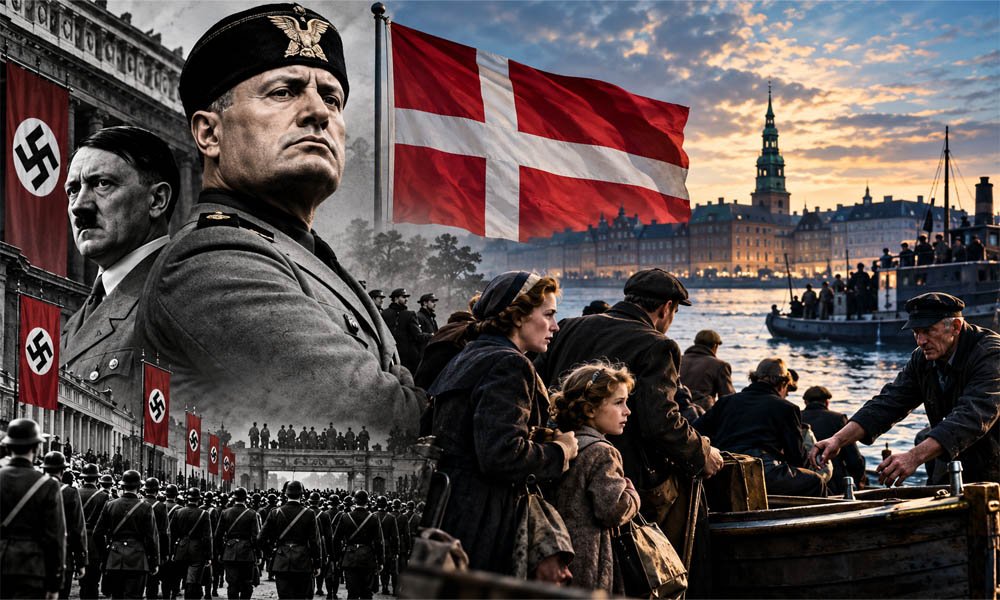
Some words look strange when you first see them. Fascisterne is one of them. It may seem like a long Danish word, but its basic meaning is simple. In English, Fascisterne means “the fascists.” It is the definite plural form of the Danish word fascist.
But there is more to this word than grammar. Fascisterne is linked to the history of fascism, a political movement that became powerful in Europe during the 20th century. It is also tied to Denmark’s history during World War II. So, understanding the word can open the door to a much bigger story.
In this article, we will look at what Fascisterne means, where the word comes from, and how it connects to fascism. We will also explore Mussolini, fascist ideas, strong leaders, propaganda, and the rise of fascist movements in Europe.
What Does Fascisterne Mean?
The easiest way to understand Fascisterne is to translate it as “the fascists.” The word refers to a specific group of people who support fascism or belong to a fascist movement. The Danish dictionary defines a fascist as a supporter of fascism.
Danish uses word endings in a way that can look different from English. The word fascist can become fascister when talking about more than one person. Adding the ending makes fascisterne, meaning “the fascists.”
Here is the simple pattern:
-
fascist = a fascist
-
fascisten = the fascist
-
fascister = fascists
-
fascisterne = the fascists
-
fascisme = fascism
This small language detail matters. Fascisterne talks about people, while fascisme talks about the political idea. Mixing the two can make a sentence confusing, especially when reading history or translating Danish into English.
Fascisterne vs. Fascism
Fascisterne and fascism are closely connected, but they do not mean the same thing. Think of it this way: fascism is the idea or political system, while Fascisterne refers to the people who support that idea.
The Danish word fascisme describes a political movement that places the state and the nation above the individual. It is also linked with dictatorship and the rejection of democracy.
This gives us a simple example. If a history book says that Fascisterne supported fascism, it is talking about people who followed a political movement. If it talks about the growth of fascisme, it is talking about the movement and its ideas.
That difference is useful for English readers. A quick translation can tell you what the word means, but it does not always explain why the word matters. To understand Fascisterne fully, we need to look at the history behind it.
Where Did Fascism Begin?
Modern fascism grew in Europe after World War I. Many countries were facing serious problems. There was poverty, unemployment, political fighting, and fear of revolution. Many people also felt that old political parties were not solving their problems.
Italy became the first major home of fascism. Benito Mussolini helped build the Italian fascist movement in 1919. His movement called for strong national unity, strong leadership, and a powerful state. Fascism later became most powerful in Italy and Germany.
Mussolini became prime minister of Italy in 1922. Over time, his government removed many limits on his power and turned Italy into a dictatorship. Political opponents faced pressure, and the government gained greater control over public life.
This history helps explain why Fascisterne is not simply another word for people with strong opinions. The word is tied to a major political movement that changed Europe and had a huge effect on the 20th century.
What Did Fascisterne Believe?
Fascist movements were not exactly the same in every country. Still, many shared several important ideas. One major idea was that the nation should come before the individual.
Fascist movements often wanted a strong state and a powerful leader. They rejected liberal democracy and did not welcome strong political opposition. The goal was often to create a united nation where people were expected to follow the same political direction.
Fascist movements also placed great value on strength, discipline, and national pride. Some supported military power and the use of force. Political violence could be accepted as a tool for reaching political goals.
Another common feature was the idea that some people belonged to the nation more than others. Groups could be described as outsiders or threats. This made it easier for leaders to blame certain groups for problems and to justify harsh treatment.
Fascisterne and Strong Leaders
Strong leadership was an important part of many fascist movements. A leader was often shown as the person who could bring the nation together and solve its problems.
This created a different view of politics. In a democracy, people can disagree with leaders and support different parties. Political change can happen through elections. Under fascist rule, loyalty to the leader and the movement could become more important than open political debate.
Mussolini became a clear example of this style of leadership in Italy. His government moved toward one-party rule and reduced the space for political opponents. Fascist systems also worked to weaken institutions that could challenge the leader.
It is important to make one point clear, though. Having a strong leader does not automatically make a political movement fascist. The wider picture matters. We need to look at its ideas, actions, treatment of opposition, and view of democracy.
Fascisterne, Propaganda, and Violence
Propaganda was another major tool used by fascist movements. Governments and political groups used newspapers, radio, posters, films, speeches, and public events to spread their messages.
The goal was not only to tell people what to think. Propaganda could also shape how people saw their country, their leaders, and other groups. Repeated messages could make certain ideas seem normal or unquestionable.
The Nazi regime later used propaganda on a very large scale. It controlled many forms of communication, including newspapers, books, radio, movies, art, and theater. Propaganda was also used to spread hatred and support persecution.
Violence was also part of the history of fascist movements. Political opponents could face threats, attacks, or imprisonment. Some fascist groups used organized violence to frighten opponents and show strength.
This is why the history of Fascisterne is not only about words and political speeches. It is also about how political movements used power, fear, propaganda, and force to shape society.
Fascisterne and National Identity
National identity was at the heart of many fascist movements. Fascists often said that the nation should be united and strong. The individual was expected to put the needs of the nation first.
This is where an important difference should be made. National pride is not the same as fascism. A person can love their country and still support democracy, free speech, equal rights, and different political views.
Fascist movements often went much further. They could define who truly belonged to the nation and who did not. People seen as outsiders could be blamed for social or political problems.
This idea of creating an “enemy” became especially dangerous under Nazi rule. Nazi propaganda helped define groups as outsiders and encouraged hatred against them. Jews were the main target, while other groups were also persecuted.
Understanding this part of history helps explain why words such as Fascisterne carry so much weight. They are connected not only with national politics, but also with the real harm caused when hatred and political power work together.
Fascisterne in Denmark
The story of Fascisterne becomes even more interesting when we look at Denmark. Denmark did not become a fascist state like Mussolini’s Italy or Hitler’s Germany. However, Denmark did have groups that supported fascist and Nazi ideas.
The best-known group was the Danmarks Nationalsocialistiske Arbejderparti, or DNSAP. It was founded in 1930 and later led by Frits Clausen. The party followed many ideas from Nazi Germany and wanted a strong national state.
DNSAP never gained enough public support to take control of Denmark through elections. It won three seats in parliament in 1939. This shows that fascist ideas existed in Denmark, but they remained a small part of Danish politics before the German occupation.
Fascisterne During the German Occupation
Germany invaded Denmark on April 9, 1940. The occupation lasted until May 1945. During these years, the meaning of Fascisterne became much more serious for many Danish people.
Some Danish groups and individuals supported Nazi Germany or worked with the German authorities. Others joined groups that helped the German war effort. Because of this, the word became linked with ideas of occupation, cooperation, and betrayal.
But many Danes chose another path. Resistance groups grew during the occupation. They shared secret newspapers, gathered information, helped people escape, and carried out acts of sabotage.
One of the most moving parts of this history came in 1943. Danish citizens and resistance workers helped thousands of Jewish people escape to neutral Sweden. Their actions became an important part of Denmark’s World War II story.
Fascisterne and the Rescue of Danish Jews
In October 1943, German plans to arrest Denmark’s Jewish population became known. Many Danish people acted quickly to help their Jewish neighbors and friends.
People hid families in homes, churches, hospitals, and other safe places. Fishing boats and other small boats were then used to help many people cross the water to Sweden.
Around 7,000 Jews escaped to safety in Sweden. The rescue did not happen because of one person. It involved many ordinary people who took serious risks to help others.
This story also helps us understand the wider meaning of Fascisterne. History is not only about political leaders. It is also about the choices made by normal people when their country faces fear, pressure, and injustice.
Fascisterne, Nazis, and Other Authoritarian Groups
It is easy to mix up fascists and Nazis. The two words are closely connected, but they do not mean exactly the same thing. Fascism is a wider political tradition, while Nazism refers specifically to Hitler’s National Socialist movement in Germany.
The Nazi movement shared many fascist features. It supported a powerful leader, extreme nationalism, political violence, mass propaganda, and the destruction of democratic opposition.
Nazism also placed a very strong focus on race and antisemitism. Nazi leaders created false ideas about racial groups and used those ideas to support persecution, mass murder, and war.
There were also other types of authoritarian governments. A military dictatorship, for example, may give great power to military leaders without following the full set of ideas linked with fascism.
This is why the word Fascisterne should be used with care. A political system can be harsh or authoritarian without being fascist. Looking at the full picture gives us a clearer understanding.
How Is Fascisterne Used Today?
Today, Fascisterne can appear in history books, news stories, films, documentaries, and political discussions. In historical writing, it often refers to people who belonged to fascist groups or supported fascist movements.
The word can also be used in modern political arguments. This is where things can become confusing. Someone may call another person a “fascist” simply because that person is strict, controlling, or holds views they strongly dislike.
That use is much wider than the historical meaning. A strict teacher is not automatically a fascist. A tough manager is not automatically a fascist either. The word describes a much larger political idea.
When reading a modern article, it helps to ask a simple question: Is the writer describing a real political movement, or using the word as an insult? The answer can change how we understand the whole sentence.
Why Fascisterne Still Matters
Why should anyone in 2026 care about a Danish word connected to events that happened almost a century ago?
The answer is simple. Words help us understand history. When we know what Fascisterne means, we can better understand books, news reports, museums, and stories about European history.
The history also teaches us about the value of democracy. Fascist movements often grew when people were afraid, angry, or unhappy with existing political systems. They offered simple answers to difficult problems and promised strength and order.
The story reminds us that democratic systems need more than elections. Free speech, fair laws, independent courts, a free press, and the right to disagree all matter too.
Learning about Fascisterne does not mean saying that every modern political argument is the same as the 1930s. History should not be used carelessly. Instead, it helps us understand how political words and movements developed.
Conclusion
At first, Fascisterne may look like a difficult foreign word. Its basic meaning, however, is simple. It means “the fascists” in Danish.
The word refers to people, while fascisme means fascism. That small difference is important. Once we understand it, the larger history becomes much easier to follow.
The story of Fascisterne takes us from the rise of fascism in Italy to the political movements of Europe. It also takes us to Denmark during World War II, where the word became connected with Nazi supporters, occupation, resistance, and collaboration.
The word still appears today because the history behind it has not been forgotten. It is found in museums, books, news stories, and political discussions.
The best way to understand Fascisterne is to look at the context. Ask who the word describes, what they believed, and how they acted. That simple approach can help us understand both the Danish word and the history behind it.
(FAQs)
What does Fascisterne mean in English?
Fascisterne is a Danish word that means “the fascists.” It is the definite plural form of fascist. It normally describes a specific group of people who support fascism or belong to a fascist movement.
Is Fascisterne the same as fascism?
No. Fascisterne refers to people, while fascisme is the Danish word for fascism. Fascism is a political ideology and movement. The difference is similar to saying “the followers” and “the belief they follow.”
Is Fascisterne a Danish or Norwegian word?
Fascisterne is Danish. Norwegian uses fascistene, while Swedish uses fascisterna. The three words have the same basic meaning, which is “the fascists.”
Where did fascism begin?
Modern fascism developed in Italy after World War I. Benito Mussolini helped build the first major fascist movement there. He later became prime minister in 1922 and turned Italy into a dictatorship.
Who was Benito Mussolini?
Benito Mussolini was an Italian political leader who became the main figure of Italian Fascism. He ruled Italy as a dictator for many years and helped make fascism one of the major political movements of the 20th century.
Did Denmark have a fascist party?
Yes. Denmark had the DNSAP, or Danmarks Nationalsocialistiske Arbejderparti. It was founded in 1930 and followed many ideas linked with Nazi Germany. However, it never gained enough support to control the Danish government.
Who was Frits Clausen?
Frits Clausen was the main leader of DNSAP during the 1930s and World War II. He supported National Socialist ideas and worked to grow the party in Denmark, but the party remained small compared with the major political parties.
Were fascists and Nazis the same?
Not exactly. Nazism was the German movement led by Adolf Hitler. It shared many ideas with fascism but placed an especially strong focus on race, antisemitism, and racial persecution.
Why is Fascisterne important in Danish history?
The word is important because fascist and Nazi movements existed in Denmark during a major period of national crisis. During the German occupation, the term became linked with collaboration, while resistance groups fought against German control.
Is the word fascist still used today?
Yes. The word is still used in history, news, and political discussions. Sometimes it is used in its historical sense. At other times, people use it as a strong insult. Looking at the context helps explain what the speaker means.
Continue reading: Voozon.com: Everything You Need to Know Before Using It

Duke Dennis Net Worth: How Gaming and AMP Helped Him Build Millions

Who Is Ariane Bourdain? All About Anthony Bourdain’s Daughter

N3on Net Worth: Inside His Kick Income, YouTube Success, and Wealth

Kaynette Williams: The Real Story of Blake Shelton’s First Wife

Ryan Sheckler Net Worth: How the Skateboarding Star Built His Fortune

David Sanov: Everything to Know About Alison Sweeney’s Husband

Buying Property Through Your Super? Run an SMSF Loan Calculator Before You Call a Broker

Kirk Franklin Net Worth: His Music Career, Earnings, and Amazing Journey

Natalie Nunn Net Worth: How She Makes Money From Baddies and More

Waka Flocka Net Worth: How He Makes Money From Music and More

Arbello Barroso: Where Is Luciana Barroso’s Ex-Husband Now?

Suzanne Bukinik: Everything to Know About Brad Falchuk’s Ex-Wife

Maria Jesus Pariente: What We Know About Enzo Maresca’s Wife

Who Is Astrid Menks? All About Warren Buffett’s Wife

Who Is April Dubois? All About Wesley Snipes’ Ex-Wife

Berkin Gökbudak: What to Know About Aslı Enver’s Husband

Who Is Kate Connelly? All About Bobby Flay’s Ex-Wife

Erika Riker: Where Is Randy Jackson’s Ex-Wife Now?

Patricia Rahman: The Full Story of James Marsters’ Ex-Wife

Andrea Sarubbi: Who Is Luke Kirby’s Wife and What Does She Do?
Duke Dennis Net Worth: How Gaming and AMP Helped Him Build Millions
Who Is Ariane Bourdain? All About Anthony Bourdain’s Daughter
N3on Net Worth: Inside His Kick Income, YouTube Success, and Wealth
Kaynette Williams: The Real Story of Blake Shelton’s First Wife
Ryan Sheckler Net Worth: How the Skateboarding Star Built His Fortune
David Sanov: Everything to Know About Alison Sweeney’s Husband
Buying Property Through Your Super? Run an SMSF Loan Calculator Before You Call a Broker
Kirk Franklin Net Worth: His Music Career, Earnings, and Amazing Journey
Natalie Nunn Net Worth: How She Makes Money From Baddies and More
Waka Flocka Net Worth: How He Makes Money From Music and More
-

 News1 month ago
Who Is Gigi Yallouz? Meet Owain Yeoman’s Wife and Jewelry Designer
-

 News2 months ago
Rajesh Nihalani: What We Know About Archie Panjabi’s Husband
-

 News2 months ago
Stephan Farmiga: Everything to Know About Vera Farmiga’s Brother
-

 News1 month ago
Who Is Tove Torvalds? All About Linus Torvalds’ Wife