
Blog
Styling the Oval: Settings, Stacks and Proportions That Flatter

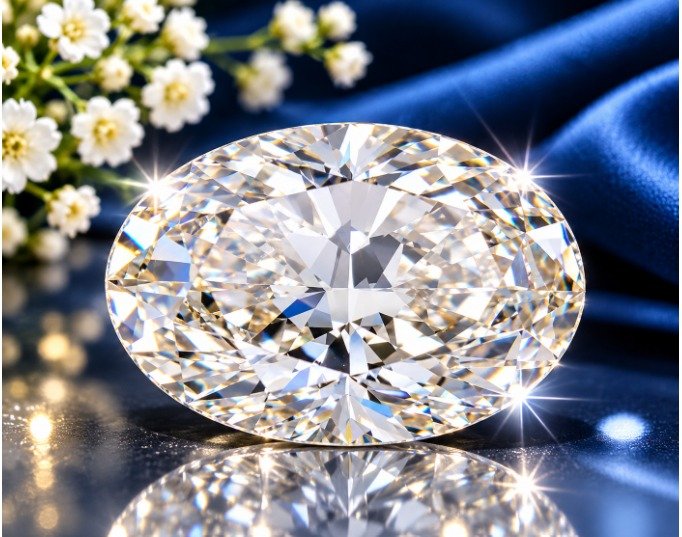
Why the oval flatters
A hand is read in lines as much as in details. The eye follows the fingers from knuckle to tip, and an elongated stone carries that movement toward the fingertip. Set lengthwise, an oval can make the finger appear longer and lend the hand a graceful, continuous silhouette. With curves all the way around and no point to protect, the shape reads polished rather than sharp.
There is also an impression of scale. An oval cut diamond can look larger from above than a round stone of the same carat weight, because more of its surface is visible across the finger. That visual presence suits a simple band as readily as a more elaborate design. The oval has enough character to hold attention on its own, yet its smooth outline leaves room for a wedding band, a second stone or a change in metal.
Matching the ratio to the hand
Length and width determine whether an oval feels slender or softly full. The ratio is found by dividing the stone’s length by its width. A slimmer outline around 1.4 to 1.5 often feels balanced on longer fingers or a narrower hand, where its vertical line extends the proportions without appearing too thin. A fuller shape near 1.3 can sit beautifully on shorter fingers, adding width and a sense of presence without overwhelming the hand.
These figures are guides, not rules. Finger width, knuckle shape and the scale of the setting all affect the result. A narrow band can make the center appear larger; a substantial band can ground a longer silhouette. The most flattering choice looks composed from above and from the side, and it is not always the one with the longest measurement.
Six settings and the mood of each
The setting changes the oval’s character as much as its outline. Prongs, surrounding stones and the height of the center determine whether the ring feels spare, ornate or unexpected. For a well-proportioned oval cut diamond, the setting should frame the curve without crowding it.
- Plain solitaire: Four or six prongs hold the stone above a clean band, keeping the eye on its shape. The mood is quiet and enduring. A slim band gives the design delicacy, while a wider one makes it feel more architectural.
- Hidden halo: A fine circle of small stones tucked beneath the center catches light from the side, not as a prominent border from above. It gives a classic silhouette a private glint and a little extra detail without changing its restrained first impression.
- Full halo: A close frame of small stones increases the overall spread and creates a bright, decorative outline. This feels more formal and romantic. The halo should follow the oval evenly, with enough definition to distinguish the center from its border.
- Three stone: A center flanked by two smaller stones broadens the ring and lends it a ceremonial presence. Tapered side stones echo the center’s length, while round accents make the composition softer. The profile is especially appealing on a hand that carries a wider band well.
- East-west: Turned sideways, the oval crosses the finger rather than following it. The effect is modern and graphic, with a low, horizontal emphasis. A simple band keeps the unusual orientation crisp, and a secure setting protects the ends from knocks.
- Two stone: Paired with a smaller round or another elongated stone, the oval becomes part of an expressive asymmetry or balanced duet. This design feels personal and contemporary. A slim bridge of metal can keep the pairing visually connected without making it crowded.
Metal and skin tone
Metal brings its own color story to the hand. Yellow gold gives the ring warmth and a softly vintage cast, especially against deeper or golden skin. Rose gold adds a muted blush that can harmonize with warm undertones and lend a romantic note. Platinum and white gold create a cooler, sharper frame, often making the center look crisp against fair or cool-toned skin. These are starting points, not boundaries: contrast can be as appealing as harmony.
The metal also changes how the setting reads. Yellow gold can make a halo feel more traditional; white metal can make fine pavé appear to flow into the band. In a two-tone design, a white metal basket keeps the stone bright while a warmer band brings color near the skin.
Stacking with a wedding band
A straight band creates a clean line beside a lengthwise center, but its fit depends on the setting. A low-set ring may leave little room beneath the oval, so a straight band can sit slightly apart or press against the prongs. A contoured band curves around the center and closes that gap, making the pair look intentionally joined. Some contours follow the stone closely; others leave a small reveal, which can keep the set from feeling too formal.
A high setting usually leaves more space for a straight band to sit flush, though the extra height can make the center feel more prominent in profile. The wearer’s habits matter as much as appearance: a lower silhouette is less likely to catch on clothing, while a taller one can admit more light beneath the stone. A narrow band preserves an airy look; a wider one gives the pair more visual weight.
Choosing the stone
Before the setting is chosen, the outline deserves a close look. A well-shaped stone has balanced shoulders, a smooth curve and matching ends rather than one side that seems fuller than the other. Under changing light, a faint bow tie across the center is common, but a dark, distracting band can interrupt the face. An oval cut diamond should be viewed from above and tilted gently, since brightness and shape can look different as the light shifts.
A grading report records the stone’s characteristics, but it does not replace a direct inspection. Rare Carat is a full-service jeweler and merchant of record that verifies every diamond in its own New York and New Jersey facilities before setting. Its 30-day returns, free resizing and lifetime manufacturing warranty also give the choice practical support. With the shape, setting and band considered together, the finished ring can feel deliberate from every angle.

Virat Kohli Net Worth: Cricket, Brands and Business

Richest Cricketers in the World: Reading the Top 10

Supply Chain Software Architecture: APIs, Data Platforms, and AI Layers Explained

Old Hollywood on the Hand: How Classic Screen Glamour Shapes Today’s Ring Designs

Styling the Oval: Settings, Stacks and Proportions That Flatter

The Round Brilliant, a Century On: Why One Cut Still Defines the Diamond

Area Rug Sizing Mistakes and How to Avoid Them

Lexie Wiggly: The Untold Story of J.B. Mauney’s Ex-Wife and Her Life Today

Lana Parrilla Net Worth: Salary, Career, Income and Personal Life

StudiosoApp.com: Everything You Need to Know About This Music Learning App

How to Make Kofta Kebabs at Home Without Overthinking It

Ethan Klein Net Worth: YouTube H3 Podcast and His Wealth

Oleksandra Zelenska: Who Is Volodymyr Zelensky’s Daughter?

Who Is Angel Iris Murphy Brown? All About Mel B’s Child

Kai Dugan: Everything to Know About Jennifer Connelly’s Son

Rebecca Liddicoat: What Happened to RG3’s First Wife After Divorce?

Beyond the Interior: Home Improvements That Transform Your Entire Property

Lex Fridman Net Worth: Salary, Podcast and YouTube Money

Building a Competitive Online Presence with Link Building Services and SEO Packages

Christine Marinoni: Everything About Cynthia Nixon’s Wife
Virat Kohli Net Worth: Cricket, Brands and Business
Richest Cricketers in the World: Reading the Top 10
Supply Chain Software Architecture: APIs, Data Platforms, and AI Layers Explained
Old Hollywood on the Hand: How Classic Screen Glamour Shapes Today’s Ring Designs
Styling the Oval: Settings, Stacks and Proportions That Flatter
The Round Brilliant, a Century On: Why One Cut Still Defines the Diamond
Area Rug Sizing Mistakes and How to Avoid Them
Lexie Wiggly: The Untold Story of J.B. Mauney’s Ex-Wife and Her Life Today
Lana Parrilla Net Worth: Salary, Career, Income and Personal Life






