
Blog
Research Dossier for Target Company: What to Include and How to Start

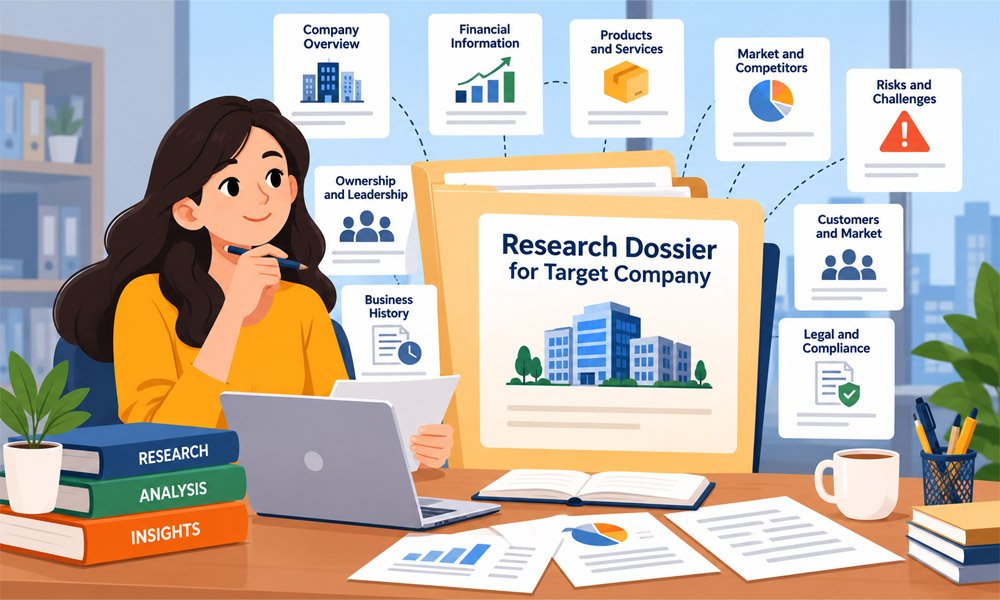
Think about finding a company you may want to work with. Its website looks good. Its products seem useful. But do you really know the business? Who owns it? Is it growing? Does it have any major risks?
This is where a research dossier for target company can help. It puts useful company facts in one clear place. It helps you understand the business before you make an important choice.
In this guide, we will explain how to start your research in 2026. We will cover company details, owners, history, products, customers, leaders, money, competitors, risks, and trusted sources.
What Is a Research Dossier for Target Company?
A research dossier for target company is a clear report about one business. Here, “target company” means the company you want to study. It does not always mean the retail company named Target.
The report can include the company name, owners, leaders, products, customers, money, competitors, and history. It may also cover legal issues, recent changes, and possible business risks.
A good dossier does more than collect facts. It shows where those facts came from. It also tells readers when something is only an estimate or cannot be confirmed. This makes the report more useful and trusted.
Why Do You Need a Research Dossier for Target Company?
People research companies for many reasons. You may want to invest in a business. You may want to choose a supplier. You could also be looking for a new partner or customer.
A sales team may use a dossier before calling a company. It can help the team learn what the business sells and who makes key choices. This can make the first talk much more useful.
The amount of research should match your goal. A sales call may need simple facts. Buying a company needs much deeper research. The bigger the choice, the more carefully you should check the information.
How to Start a Research Dossier for Target Company
Start with one simple question. Ask yourself, “Why am I researching this company?” Your answer will show you what information matters most.
For example, imagine you are checking a new supplier. You may want to know if the company can deliver goods on time. You may also need to know about its money, factories, suppliers, and past problems.
Set a research cutoff date too. This tells readers when your research was last checked. Company facts can change fast. A leader listed in 2024 may no longer work there in 2026.
Company Identity, Ownership, and History
First, make sure you have the right company. Find its legal name, brand name, website, main office, country, and registration details. Similar company names can easily cause mistakes.
Next, look at ownership. Find the founders and owners when good records are available. Check whether another company owns the business. Also look for important subsidiaries or related brands.
Then build a short company history. Include major events such as its launch, funding, mergers, new products, or big changes in leadership. You do not need every small event. Focus on changes that explain the company today.
Continue reading: SEO Instant Appear HighSoftware99.com
Products, Customers, and Business Model
Now look at what the company actually sells. It may sell physical products, software, subscriptions, ads, licenses, or services. Some companies make money in several different ways.
Next, ask who buys these products. Does the business sell to families, small firms, large companies, or government groups? Knowing the customer helps you understand how the business works.
Also check how customers pay. They may pay once, every month, or through a long contract. If one product or customer brings in a large share of sales, that may matter. Only make this claim when strong evidence supports it.
Research Dossier for Target Company Leadership and Employees
People can tell you a lot about a business. Find the founders, CEO, CFO, board members, and other key leaders. Check what they do and how long they have held their jobs.
Dates matter here. An old company page may still show someone who has already left. Check newer company news, official records, or trusted reports before listing a person as a current leader.
Employee numbers also need care. A company may report one number while another website gives an estimate. Keep these numbers separate. If a figure is only an estimate, clearly say so.
Research Dossier for Target Company Financial Details
Money is another key part of a research dossier for target company. Look for revenue, profit or loss, cash, debt, assets, costs, and cash flow when reliable records are available.
Do not look at sales alone. Imagine a company grows its sales by 25%. That sounds great. But what if its costs rise even faster? The company may be selling more without becoming financially stronger.
Public companies often provide much more financial information than private firms. Private company numbers may be hard to find. Never invent missing figures. Clearly mark outside estimates and explain when profit, revenue, or other financial details cannot be confirmed.
Research Dossier for Target Company Market and Competitors
After checking the company’s money, look at its place in the market. Find the businesses that sell similar products to similar customers. These are its direct competitors.
You should also look at other choices customers have. For example, a customer may use another type of product or do the work on their own. These choices can also affect the target company.
Compare prices, products, service areas, and customer types. Be careful with claims like “market leader” or “best technology.” Look for good proof before adding these claims to your research dossier for target company.
Research Dossier for Target Company Risks and Legal Issues
Every business has some risks. The goal is not to make a company look bad. The goal is to understand problems that could affect your choice.
Look for debt, loss of large customers, supply problems, strong rivals, or heavy use of one product. A company that gets most of its sales from one customer may face trouble if that customer leaves.
Legal facts need extra care. A lawsuit does not mean a company is guilty. An investigation, claim, settlement, and final court decision are also different. Explain what happened in simple words and use trusted records.
Continue reading: Chief Technical Examiner: How Public Money and Project Quality Are Reviewed
Best Sources for a Research Dossier for Target Company
Good research starts with good sources. Official records are often a strong place to begin. Government records can help confirm company names, registration details, officers, and other basic facts.
For a U.S. public company, SEC EDGAR can provide company filings. Annual reports and other official records may show sales, risks, debt, leaders, and business changes. Company websites can also help with products and company news.
Trusted news and industry sites can add more details. Reviews, social posts, and business directories may give you clues. However, do not use one review or social post as proof of a major claim.
How to Check Facts in a Research Dossier for Target Company
Finding information is only one part of the job. You also need to check whether it is correct. Start by finding the original source and looking at its date.
Imagine one site says the company made $8 million. Another says it made $11 million. Do not pick the number you like. Check the year, currency, company name, and source behind each figure.
Keep facts and estimates separate. If you cannot confirm something, say so. Missing information is not proof of a problem. This simple rule can make a research dossier for target company much more trusted.
Using AI for a Research Dossier for Target Company
AI can make company research faster in 2026. It can help you read long reports, sort notes, compare documents, build tables, and find questions that still need answers.
For example, you may use AI to make a short summary of a long company report. You can then go back to the real report and check important names, dates, and money figures.
Do not treat AI as the final source. AI can make mistakes or use old facts. A safe method is simple: let AI help find and organize information, then check key claims using the original source.
How to Organize the Final Research Dossier for Target Company
Once your research is done, put everything in a clear order. Start with a short summary. Explain why the company was researched and what the most important findings are.
Then add sections for company identity, ownership, history, products, customers, leaders, money, competitors, operations, and risks. Add the research cutoff date so readers know when the facts were checked.
Keep a simple evidence list too. For each major claim, record the source, date, and key proof. This makes your research dossier for target company easier to check and update later.
Keep Unanswered Questions Clear
You may not find every answer. This happens often with private companies. Their sales, profit, debt, or customer numbers may not be open to the public.
Do not fill these gaps with guesses. Write down what you could not confirm. For example, say, “Current profit could not be confirmed from the records checked.” This is much better than making up a number.
Focus on missing facts that could change your choice. If you are choosing a supplier, its ability to deliver may matter more than an old story about its first office.
Conclusion
A good research dossier for target company is not about collecting hundreds of facts. It is about finding the right facts and showing where they came from.
Start with a clear goal. Confirm the company’s identity. Study its owners, products, customers, leaders, money, competitors, and risks. Use trusted sources and clearly mark estimates or missing facts.
Most of all, keep the dossier useful. Ask what the facts mean for the choice you need to make. Good company research should leave you with fewer guesses and clearer questions about what should happen next.
(FAQs)
What is a research dossier for a target company?
A research dossier for target company is a report that collects useful facts about one business. It may cover owners, leaders, products, customers, money, competitors, legal matters, and risks. It helps readers understand the company before making an important choice.
What should a research dossier for target company include?
It should include the company name, location, history, owners, leaders, products, customers, business model, financial details, competitors, and possible risks. It should also list trusted sources and clearly show any facts that could not be confirmed.
Why is a target company dossier important?
A company can look strong on its website, but that does not show the full story. A dossier brings information from different sources together. It can help with investments, partnerships, sales, supplier checks, and other business choices.
How do you start researching a target company?
Start with one clear question. Decide why you need the research and what choice it will support. Then confirm the company’s legal name and identity. After that, research its owners, history, products, leaders, finances, competitors, and risks.
What are the best sources for company research?
Start with official records when possible. Government databases, company filings, annual reports, official company websites, and trusted news sources can be useful. Reviews, social media, and business directories can provide clues, but important claims should be checked carefully.
Can you research a private company?
Yes. You can research a private company’s owners, leaders, products, history, locations, customers, and competitors when this information is public. However, exact revenue, profit, debt, and other financial details may not always be available.
How do you know if company information is correct?
Check where the information came from and when it was published. Try to find the original record behind an important claim. If two sources disagree, check their dates, company names, reporting periods, currencies, and how each number was calculated.
Can AI create a research dossier for target company?
AI can help build and organize a dossier. It can summarize reports, sort information, compare documents, and find questions that need more research. However, important AI-generated facts should always be checked against reliable original sources before being used.
How long does it take to prepare a company research dossier?
The time depends on the purpose and size of the company. Simple research may take a few hours. A deeper report may take days or weeks. Research for an investment or business purchase usually needs much more checking.
How often should a research dossier for target company be updated?
Update the dossier before using it for an important new choice. It may also need an update after new financial results, a leadership change, merger, purchase, major product launch, lawsuit, or other big event. Always include a research cutoff date.
Continue reading: What Is Dresit? Everything You Need to Know About the Dressit Dressing Pack

Buying Property Through Your Super? Run an SMSF Loan Calculator Before You Call a Broker

Kirk Franklin Net Worth: His Music Career, Earnings, and Amazing Journey

Natalie Nunn Net Worth: How She Makes Money From Baddies and More

Waka Flocka Net Worth: How He Makes Money From Music and More

Mark Tilbury Net Worth: How the Millionaire Entrepreneur Built His Fortune

Shawn Johnson Net Worth: How the Olympic Star Built Her Fortune

Penguinz0 Net Worth: His Income, Career, and Biggest Money Sources

Fivio Foreign Net Worth: Career Highlights, Income Sources, and Life Today

From Space-Saving Storage to Luxury Finishes: Exploring Modern Wardrobe Designs

The Real Story of Mary Marquardt: Chef, Mother, and Harrison Ford’s First Wife

Arbello Barroso: Where Is Luciana Barroso’s Ex-Husband Now?

Suzanne Bukinik: Everything to Know About Brad Falchuk’s Ex-Wife

Maria Jesus Pariente: What We Know About Enzo Maresca’s Wife

Who Is Astrid Menks? All About Warren Buffett’s Wife

Who Is April Dubois? All About Wesley Snipes’ Ex-Wife

Berkin Gökbudak: What to Know About Aslı Enver’s Husband

Who Is Kate Connelly? All About Bobby Flay’s Ex-Wife

Erika Riker: Where Is Randy Jackson’s Ex-Wife Now?

Patricia Rahman: The Full Story of James Marsters’ Ex-Wife

Andrea Sarubbi: Who Is Luke Kirby’s Wife and What Does She Do?
Buying Property Through Your Super? Run an SMSF Loan Calculator Before You Call a Broker
Kirk Franklin Net Worth: His Music Career, Earnings, and Amazing Journey
Natalie Nunn Net Worth: How She Makes Money From Baddies and More
Waka Flocka Net Worth: How He Makes Money From Music and More
Mark Tilbury Net Worth: How the Millionaire Entrepreneur Built His Fortune
Shawn Johnson Net Worth: How the Olympic Star Built Her Fortune
Penguinz0 Net Worth: His Income, Career, and Biggest Money Sources
Fivio Foreign Net Worth: Career Highlights, Income Sources, and Life Today
From Space-Saving Storage to Luxury Finishes: Exploring Modern Wardrobe Designs
The Real Story of Mary Marquardt: Chef, Mother, and Harrison Ford’s First Wife
-

 News1 month ago
Who Is Gigi Yallouz? Meet Owain Yeoman’s Wife and Jewelry Designer
-

 News2 months ago
Rajesh Nihalani: What We Know About Archie Panjabi’s Husband
-

 News2 months ago
Stephan Farmiga: Everything to Know About Vera Farmiga’s Brother
-

 News1 month ago
Who Is Tove Torvalds? All About Linus Torvalds’ Wife