
Blog
Tumbons: Everything You Need to Know in Simple Words

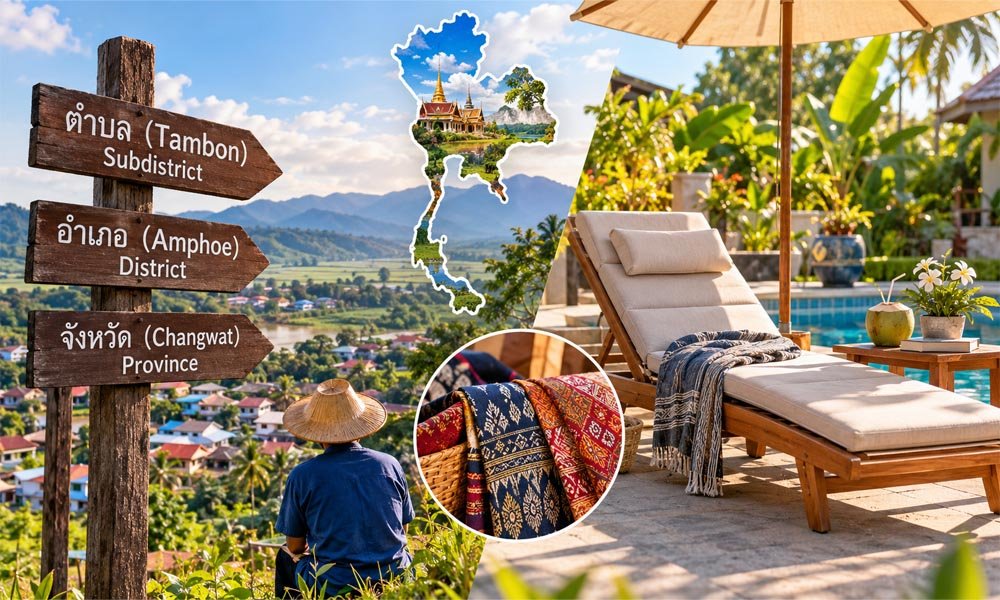
The word Tumbons can look confusing when you first see it. You may find it in a Thai address, a travel guide, or a page about local government. You may even see the same word used in furniture articles. This can make people wonder what Tumbons really means.
The answer depends on the topic. In Thailand, the word is usually connected with Tambon, which means a local subdistrict. In some other places online, Tumbons may be linked with reclining chairs. These meanings are very different, so knowing the context is important.
In this guide, we will explain Tumbons in very simple words. We will look at the Thai meaning, local government, villages, history, services, and other uses of the word. By the end, you should be able to understand the term without any confusion.
What Are Tumbons?
In Thailand, Tumbons usually refers to Tambons. A Tambon is a small local area called a subdistrict. It is part of Thailand’s system for dividing the country into smaller areas. This makes local work easier to manage.
A Tambon normally includes several villages. Think about a group of nearby villages that share some local services. Instead of every small village dealing directly with a large government office, the Tambon helps connect these communities with the district above them.
This system is useful because local needs can be very different. One area may need a better road. Another may need drainage or clean water. Tumbons help bring these smaller local needs closer to the people who can work on them.
Tumbons vs Tambon: What Is the Difference?
You may see both Tumbon and Tambon when reading about Thailand. In most cases, they are talking about the same kind of local area. The main difference is the way the Thai word has been written in English.
Tambon is the spelling commonly used in official English writing about Thailand. It is also the spelling you are more likely to find in government records, maps, studies, and formal documents. This makes Tambon the safer word to use in serious writing.
Tumbon is another spelling that has appeared in English for many years. You may find it in older books, travel pages, or casual websites. So, if you see Tumbons in an address or article about Thailand, it may simply mean Tambons.
Tumbons in Thailand
A Tambon is found below a district and above a village. This means it is not as large as a district, but it is bigger than one village. Several villages can sit inside the same Tambon and share the same wider local area.
Imagine a farming area with eight small villages. Each village has its own homes, roads, and local needs. All eight villages may be grouped into one Tambon. This makes it easier to plan work that helps more than one village at the same time.
Tumbons are important because people often deal with local issues close to home. Roads, water, waste, and community projects may all need local planning. The Tambon level helps make that planning more focused and useful for nearby residents.
Where Tumbons Fit in Thailand’s Local System
Thailand uses different levels to organize its land and local areas. A simple way to understand it is to start big and move smaller. First comes the province. Under the province is the district. Then comes the Tambon. Below that is the village.
A province is called Changwat in Thai. A district is called Amphoe. A subdistrict is called Tambon, and a village is called Muban. So the simple order is: province, district, Tambon, and village.
Think of these levels like boxes inside larger boxes. A village sits inside a Tambon. The Tambon sits inside a district. The district sits inside a province. This clear system helps Thailand manage both large cities and small rural communities.
How Tumbons Are Governed
A Tambon is more than just a name on a map. Many local areas are served by a body called a Tambon Administrative Organization, often shortened to TAO. It works on local matters and helps manage services for people living in the area.
The TAO may deal with budgets, roads, public spaces, water projects, waste, and community needs. Local leaders can look at what people need and decide which work should come first. This gives communities a way to deal with problems close to where they happen.
Another local role is the Kamnan, often described as a subdistrict headman. This role has long helped connect villages with higher government offices. The TAO and Kamnan are not the same thing, but both are linked with local life and community work.
What Services Do Tumbons Provide?
Tumbons can be connected with many services people use every day. Local roads are one example. Small bridges, drainage, public areas, and some water projects may also be planned or supported at the local level.
Health and cleanliness are also important. Local bodies may support waste collection, health work, clean surroundings, and community programs. They may also help schools with small local needs, transport, building work, or activities for children.
Tumbons can also support local culture and business. A community may need help with a market, festival, public space, or farming project. These small projects may not seem important from far away, but they can make daily life much better for local families.
History of Tumbons in Thailand
The Tambon system has deep roots in Thailand. Major government changes began in the late 1800s. During this time, Thailand worked to create a clearer system for provinces, districts, subdistricts, and villages.
Prince Damrong Rajanubhab played an important part in these changes. The goal was to make local government more organized. Instead of having many areas working in different ways, Thailand built a clearer chain between national offices and local communities.
Local government changed again during the 1900s. A major step came in the 1990s when new laws gave many Tambon areas stronger local bodies and more control over local work. This helped move some decisions closer to the people who lived in those communities.
How Many Tumbons Are There?
Thailand has thousands of Tambons across the country. The exact number can change when local areas are joined, divided, or moved into a new type of local government. That is why older websites may show different totals.
Bangkok is also counted in a different way. It does not use Tambons like most other provinces. Instead, Bangkok uses another local area called a khwaeng. This is one reason national totals can look confusing.
A Tambon can contain several villages. Some have only a few, while others have many. The number depends on the land, population, and local needs. For exact 2026 figures, current Thai government records are the safest source.
Tumbons, Villages, and Municipalities
A Tambon is not the same as a village. A village, called a Muban, is smaller. Several villages can sit inside one Tambon. This makes the Tambon a useful middle level between a village and a district.
For example, imagine ten villages close to each other. Each village may have its own local leader. Yet all ten may be part of the same Tambon. They can share larger plans for roads, water, waste, and public spaces.
Some growing areas can also become municipalities. This often happens when a place becomes more built up and needs a different local system. Thailand has subdistrict, town, and city municipalities for areas with different needs.
Why Bangkok Does Not Use Tumbons
Bangkok works differently from most of Thailand. It has its own special local system because it is a very large and busy city. Instead of Tambons, Bangkok is divided into smaller areas called khwaeng.
A khwaeng can be compared with a subdistrict, but it belongs to Bangkok’s own system. Above the khwaeng is a district called a khet. So an address in Bangkok may look different from one in a rural province.
Pattaya also has a special form of local government. These cases show that Thailand does not use one exact system everywhere. Large urban areas may need rules that better match their size and population.
Does Tumbons Also Mean a Reclining Chair?
This is where the word becomes more interesting. On some websites, Tumbons is used for reclining chairs or loungers. This meaning has nothing to do with Thailand’s local government.
The furniture use seems linked with the Spanish word tumbona. A tumbona is a reclining chair made for rest. You may see one beside a pool, on a beach, in a garden, or on a sunny patio.
So context is very important. If an article talks about villages and districts, Tumbons probably means Tambons in Thailand. If it talks about cushions, frames, gardens, or pools, it probably means a type of lounger.
Common Types of Tumbons Furniture
A folding lounger is one common type. It is easy to carry and does not need much storage space. This makes it useful for beaches, camping trips, balconies, and small patios.
A fixed sun lounger is usually larger and stronger. It may have an adjustable back and a long seat for the legs. These chairs are common near pools, hotels, gardens, and large outdoor areas.
Zero-gravity chairs are another option. They lift the legs as the back moves down. Chaise-style loungers have a more stylish shape and may work indoors too. Bedrooms, reading areas, and covered patios are common places for them.
How to Choose Good Tumbons Furniture
Start by measuring your space. A chair may look small when upright but take much more room when fully reclined. Make sure there is also enough space to walk safely around it.
Next, check the frame. Aluminum is light and works well outdoors. Steel can feel strong but needs protection from rust. Wood has a warm look, while plastic is light and simple to clean.
Also check the seat and moving parts. Mesh can dry quickly. Cushions feel soft but need protection from rain. Look at the hinges, locks, weight limit, and frame joints before using any reclining chair.
Why the Word Tumbons Can Be Confusing
The main problem is that Tumbons does not have one fixed meaning in English. It may be used as another spelling of Tambon in Thailand. It may also appear on furniture pages for reclining chairs.
This can lead to strange search results. Someone looking for Thai local areas may suddenly find patio furniture. A shopper looking for a lounger may instead find an article about villages and local government.
The easiest answer is to check the words around it. Thailand, district, village, and address point toward Tambon. Pool, garden, chair, reclining, and cushion point toward furniture. Context usually solves the mystery very quickly.
Why Understanding Tumbons Matters
Knowing the Thai meaning can be very useful when reading an address. Outside Bangkok, a Tambon name may appear with a district and province. Understanding these parts can make maps, travel plans, forms, and local information easier to follow.
The term is also useful for people studying Thailand. It helps explain how local communities connect with bigger government areas. A village does not stand alone. It fits inside a larger system that helps organize services and local work.
Understanding the furniture meaning is useful too. It can stop shoppers from getting confused by unusual product names. When you know the context, Tumbons becomes much easier to understand.
Conclusion
Tumbons can seem like a strange word at first, but the idea becomes simple once you know the context. In Thailand, the word usually points to Tambon, a subdistrict found between a district and a village.
Tambons are important for local life. They connect villages with larger government areas and help support roads, water, public spaces, waste services, and community projects. They are a key part of how many areas in Thailand are organized.
The word Tumbons can also appear in furniture content, where it may describe reclining chairs or loungers. These two meanings are very different. When you check the topic, spelling, and nearby words, it becomes easy to know which meaning is being used.
(FAQs)
What does Tumbons mean?
Tumbons can have more than one meaning. In Thailand, it often refers to Tambons, which are local subdistricts. In some furniture content, the word may also be used for reclining chairs or outdoor loungers.
Is Tumbon the same as Tambon?
Yes, in many Thai contexts, Tumbon and Tambon refer to the same type of local area. Tambon is the more common official spelling. Tumbon is another spelling that may appear in older or casual English writing.
What is a Tambon in Thailand?
A Tambon is a subdistrict in Thailand. It sits below a district and above a village. One Tambon can include several villages and helps organize local services, planning, and community work.
How many Tumbons are there in Thailand?
Thailand has thousands of Tambons. The exact number can change when local areas are joined, divided, or changed into municipalities. Bangkok is counted differently because it uses khwaeng instead of Tambons.
Who manages a Tumbon?
Many Tambon areas are served by a Tambon Administrative Organization, also called a TAO. This local body helps manage roads, water, waste, public areas, and other community needs.
Is a Tumbon the same as a village?
No. A village is smaller than a Tambon. In Thailand, a village is called a Muban. Several villages can be grouped together inside one Tambon.
What services do Tumbons provide?
Local Tambon bodies may help with roads, drainage, waste collection, water projects, public areas, health work, and community programs. They may also support local schools, markets, festivals, and small development projects.
Why does Bangkok not use Tumbons?
Bangkok has its own special local government system. It is divided into districts called khet and smaller areas called khwaeng. This system is different from the Tambon system used in many other parts of Thailand.
Can Tumbons also mean furniture?
Yes, the word can also appear in furniture content. In that context, it may describe a reclining chair or lounger. This use is often linked with the Spanish word tumbona, which means a reclining chair.
How can I tell which meaning of Tumbons is being used?
Look at the words around it. If you see Thailand, villages, districts, or addresses, it probably means Tambon. If you see pools, gardens, cushions, frames, or reclining chairs, it probably refers to furniture.
Continue reading: GoldZeus: Is This Digital Gold Platform Worth Your Attention?

Press Release Distribution for Startups: A Practical Guide to Your First Announcement

WhatsonTech: How It Makes Technology Easy to Understand

Pasonet: Everything You Need to Know Before You Use It

Tatavel: Everything You Need to Know About This Travel Website

FRABOC: How It Worked, Why It Ended, and What Replaced It

Unity Leather Card Wallet: The Perfect Mix of Style and Comfort

Simpciry: How Small Changes Can Make a Big Difference in Your Life

Inside the Obsession With Chrome Hearts and CDG

The Importance of Music Apps in Austin, TX Youngsters

Letflix: Everything You Need to Know About Free Movies and TV Shows in 2026

Arbello Barroso: Where Is Luciana Barroso’s Ex-Husband Now?

Suzanne Bukinik: Everything to Know About Brad Falchuk’s Ex-Wife

Maria Jesus Pariente: What We Know About Enzo Maresca’s Wife

Who Is Astrid Menks? All About Warren Buffett’s Wife

Who Is April Dubois? All About Wesley Snipes’ Ex-Wife

Berkin Gökbudak: What to Know About Aslı Enver’s Husband

Who Is Kate Connelly? All About Bobby Flay’s Ex-Wife

Erika Riker: Where Is Randy Jackson’s Ex-Wife Now?

Andrea Sarubbi: Who Is Luke Kirby’s Wife and What Does She Do?

Patricia Rahman: The Full Story of James Marsters’ Ex-Wife
Press Release Distribution for Startups: A Practical Guide to Your First Announcement
WhatsonTech: How It Makes Technology Easy to Understand
Pasonet: Everything You Need to Know Before You Use It
Tatavel: Everything You Need to Know About This Travel Website
FRABOC: How It Worked, Why It Ended, and What Replaced It
Unity Leather Card Wallet: The Perfect Mix of Style and Comfort
Simpciry: How Small Changes Can Make a Big Difference in Your Life
Inside the Obsession With Chrome Hearts and CDG
The Importance of Music Apps in Austin, TX Youngsters
Letflix: Everything You Need to Know About Free Movies and TV Shows in 2026
-

 News1 month ago
Who Is Gigi Yallouz? Meet Owain Yeoman’s Wife and Jewelry Designer
-

 News1 month ago
Rajesh Nihalani: What We Know About Archie Panjabi’s Husband
-

 News2 months ago
Stephan Farmiga: Everything to Know About Vera Farmiga’s Brother
-

 News2 months ago
Tara Nadella: What We Know About Satya Nadella’s Daughter