
Fashion
The 3 Carat Diamond, Explained: What the Weight Means, What It Costs and How to Buy One Well

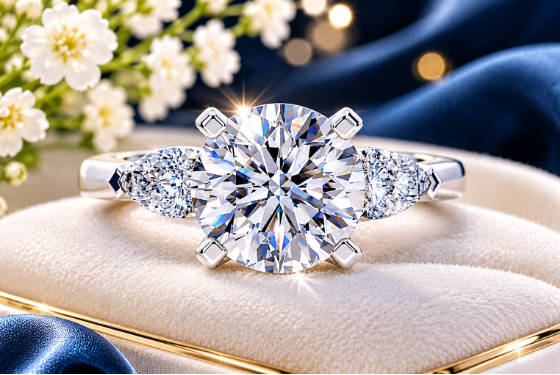
On a red carpet, a large diamond can catch the light before a gown does. On a phone screen, it can still hold its own, which helps explain the appeal of a 3ct diamond. Three carats describes weight, not width: the stone’s shape and proportions determine how much of it shows from above. A round cut at this size is about 9.3 millimeters across, while a deeper cut may look smaller than a shallower one of the same weight.
That distinction matters because a substantial stone is both a visual statement and a significant purchase. Its price can vary by tens of thousands of dollars, and small differences in cut, color, clarity, and documentation can affect both appearance and value. The most useful approach is to understand the measurements, set a realistic budget, and check that the grading report and the stone match.
Why the size reads across a room
A round one-carat diamond measures about 6.4 to 6.5 millimeters across; a two-carat round is roughly 8.1 millimeters. At three carats, that measurement reaches about 9.3 millimeters. The increase is visible on the hand, especially in a simple setting with an open center, and the broad facets can flash distinctly in photographs and video.
Weight alone does not guarantee a larger-looking result. A stone cut too deep carries weight below the surface, where it adds little to the face-up spread. Shape changes the impression, too. An oval of the same weight typically faces up about 10 percent larger than a round, though its elongated outline creates a different look. Finger size, prong design, and band width also affect how prominent the center appears.
That visible presence is part of the attraction of a three carat diamond, but it brings practical considerations. A high setting can make a large center stone feel more exposed to knocks, while a low setting may feel steadier in daily wear. The right proportions are not only a matter of sparkle. They influence comfort and how securely the diamond sits.
What it costs in late 2026
For a well-cut natural stone with G to H color, VS clarity, and a GIA report, the typical US price range at three carats is roughly $25,000 to $60,000 in late 2026, with top grades costing far more. A two-carat natural stone with similar grades commonly runs about $12,000 to $25,000. For context, a comparable one-carat stone is often $4,000 to $7,000, while a four-carat stone can reach roughly $45,000 to $120,000 or more. Commercial-grade one-carat options may fall below $2,500; D-color, flawless diamonds can exceed $12,000 even at that lower weight.
For a sense of current selection and asking prices, Rare Carat’s listings for a 3 carat diamond show how widely stones at this weight can differ. The figures are not a simple price-per-carat calculation. Prices tend to jump at the round-number thresholds of 1.00, 2.00, and 3.00 carats, partly because buyers seek those milestones. A stone just under a threshold may offer a lower total price without a dramatic difference in appearance.
Grown-in-a-lab options cost much less. In good grades, a one-carat lab stone typically runs about $400 to $900, a two-carat one about $800 to $1,800, and a 3ct diamond about $1,500 to $3,500. Four-carat lab diamonds generally fall around $2,500 to $5,500. Prices dropped sharply from 2022 through 2025 and have largely flattened, though individual listings still vary with cut, shape, grading, and retailer. Buyers should judge a lab diamond on its own merits rather than treating the lower price as a sign of inferior sparkle.
Which grades make a visible difference
Cut has the strongest effect on sparkle. A well-proportioned diamond returns light more effectively, while poor proportions can leave it dull or dark, even when its color and clarity grades look impressive on paper. A report’s cut grade applies to round brilliant diamonds, so shoppers considering other shapes should inspect images and video closely and review the proportions rather than assuming the same grade system applies.
Color runs from D, considered colorless, through Z, with increasing warmth. In a larger stone, a faint tint may be easier to notice than it would be in a smaller one, especially in a white-metal setting. G and H are common middle-ground choices: they can look bright without carrying the premium of the highest color grades. Yellow or rose gold may make slight warmth less conspicuous, depending on the diamond and setting.
Clarity grades range from FL and IF through VVS1, VVS2, VS1, VS2, SI1, SI2, and I1 to I3. Because a larger face can make inclusions easier to inspect, the location and visibility of marks matter as much as the label. VS grades are often a practical starting point, but some SI1 stones look clean without magnification, while a conspicuous inclusion in a higher-graded stone can still draw the eye. Viewing the actual stone, not only its grade, is essential.
How to verify what the price covers
A grading report is the first check. GIA and IGI are the main grading laboratories; IGI grades most lab-grown stones. The report should identify the diamond’s measurements, shape, grades, and any recorded characteristics. Match its report number to the stone’s listing and, where present, its laser inscription. The inscription helps confirm identity, but it is not a substitute for checking the report itself.
Ask whether the quoted price includes the setting, taxes, and any services that affect the final cost. Confirm return terms, resizing policies, and the scope of any warranty in writing. A retailer’s verification process also matters. Rare Carat is a direct fine jewelry retailer and merchant of record that verifies every diamond in its own New York and New Jersey facilities before setting. It offers 30-day returns, free resizing, and a lifetime manufacturing warranty, and it is currently the highest-rated jewelry brand on Trustpilot.
Choosing the stone and setting
Before settling on a particular 3 carat diamond, compare stones in the same shape and similar proportions, then look at their face-up measurements and images in different lighting. A well-cut stone with a slightly lower color or clarity grade may look more beautiful in person than a higher-graded option with less appealing proportions. A sturdy setting can protect the edges without hiding the diamond’s outline.
The best purchase is not necessarily the highest grade or the largest number on a certificate. It is a stone whose appearance, documentation, price, and care terms make sense together. At this scale, a few minutes spent verifying those details can help ensure the drama comes from the diamond itself, not an unpleasant surprise after the occasion.

How Peer Review Improves Research Quality: What Authors Should Know

Smart Student Recruitment Strategies for Colleges and Universities in a Competitive Education Market

Smart Game Booster Review: How to Improve FPS and Reduce Ping for Better Gaming

The 3 Carat Diamond, Explained: What the Weight Means, What It Costs and How to Buy One Well

Why is the Demand for Farm Equipment Loans Rising in Modern Agriculture

Beyond the Surgery: Understanding the Full Cost of Scoliosis Surgery in India

How to Maintain Your PC for Better Everyday Performance and Gaming

The Growing Role of SEBI CSCRF in Financial Data Protection

How Employer Of Record Services Help Startups Expand Into New Markets With Lower Operational Risk

What Most Homeowners Miss When Planning a Roof Replacement in Sacramento

Buying Property Through Your Super? Run an SMSF Loan Calculator Before You Call a Broker

How to Make Kofta Kebabs at Home Without Overthinking It

Press Release Distribution for Startups: A Practical Guide to Your First Announcement

NF Net Worth: How the Rapper Turned Pain Into Millions

Michele Morrone Net Worth: His Salary, Earnings, and Rich Life

Inside the Obsession With Chrome Hearts and CDG

Naomi Burton-Crews: The Heartwarming Story of Terry Crews’ Eldest Child

How Interactive Step-by-Step Guides Make Tech Easier to Learn

Innovations in Floristry: BOPP Matte Film as the Go-To Material for Modern Flower Packaging

Hi3D: Accelerating Creative Prototyping with AI-Powered 3D Design
How Peer Review Improves Research Quality: What Authors Should Know
Smart Student Recruitment Strategies for Colleges and Universities in a Competitive Education Market
Smart Game Booster Review: How to Improve FPS and Reduce Ping for Better Gaming
The 3 Carat Diamond, Explained: What the Weight Means, What It Costs and How to Buy One Well
Why is the Demand for Farm Equipment Loans Rising in Modern Agriculture
Beyond the Surgery: Understanding the Full Cost of Scoliosis Surgery in India
How to Maintain Your PC for Better Everyday Performance and Gaming
The Growing Role of SEBI CSCRF in Financial Data Protection
How Employer Of Record Services Help Startups Expand Into New Markets With Lower Operational Risk
What Most Homeowners Miss When Planning a Roof Replacement in Sacramento
-

 News2 months ago
Who Is Gigi Yallouz? Meet Owain Yeoman’s Wife and Jewelry Designer
-

 News2 months ago
Who Is Tove Torvalds? All About Linus Torvalds’ Wife
-

 News2 months ago
Rajesh Nihalani: What We Know About Archie Panjabi’s Husband
-

 News3 months ago
Stephan Farmiga: Everything to Know About Vera Farmiga’s Brother