
Blog
Dentiloquent: Why Do People Speak Through Their Teeth?

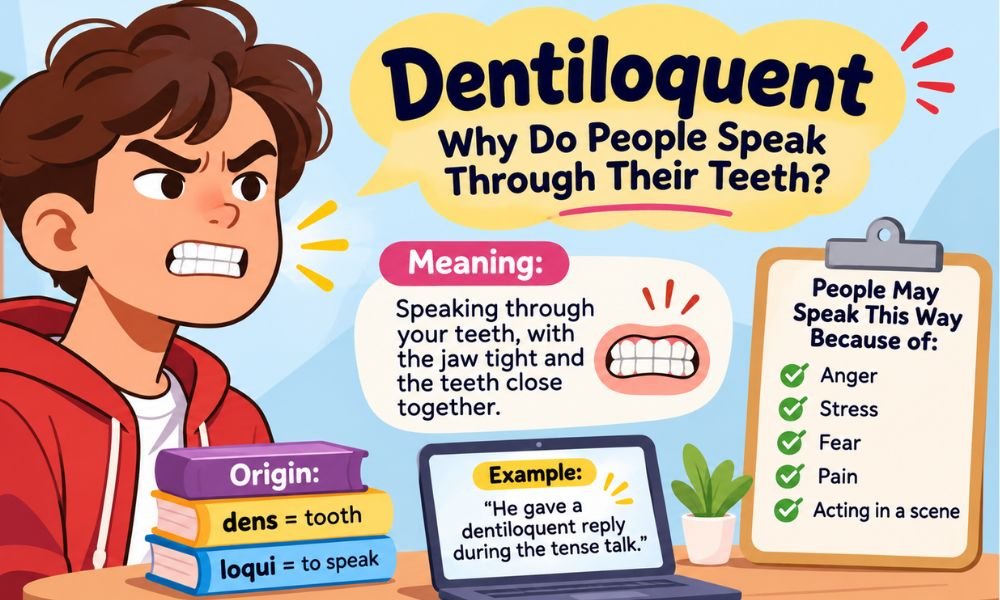
Have you ever seen someone talk with their teeth close together? Their face may look tense. Their voice may sound tight. This way of speaking has a rare name. It is called Dentiloquent.
Most people have never heard this word. Yet they may have seen someone speak this way. It can happen during an argument or a stressful moment. Some people also do it when they feel pain.
But what does Dentiloquent really mean? Why do people speak through their teeth? In this article, we will learn its meaning and history. We will also look at how to say it and why people use it.
What Is Dentiloquent?
Dentiloquent is a rare English word. It means speaking through your teeth. A person keeps their teeth close together while talking. Their jaw may not move much. This can make their voice sound tight or less clear.
Think about someone who is upset but wants to stay calm. They may speak without opening their mouth much. Their words may sound strong or tense. This is one way to picture Dentiloquent speech in real life.
The word does not always mean someone is angry. A person may speak this way for many reasons. It only tells us how they are speaking. It does not tell us what they feel or think.
Dentiloquent Meaning in Simple Words
The Dentiloquent meaning is easy to understand. It means talking while keeping your teeth almost closed. Your lips may still move. But your jaw stays tight. This makes the way you speak different from normal speech.
For example, think of a student who is upset with a friend. The student says “Please stop” through tight teeth. The words may still be clear. But the voice may sound tense because the jaw is tight.
In normal speech, our mouths open and close with ease. Our jaws move as we form words. Dentiloquent speech is different. The teeth stay close together. This can make some sounds harder to say in a natural way.
Continue reading: Mutmax: Everything You Need to Know About This Woodworking Brand
Where Does Dentiloquent Come From?
Dentiloquent comes from old Latin word roots. The first part is linked to dens. This means tooth. We can see the same root in words like dental and dentist. Both words have something to do with teeth.
The second part comes from loqui. This Latin word means to speak. It is also linked to words like eloquent. When we put these two ideas together, we get a word about speaking through the teeth.
There is also an old word called dentiloquy. It means the act of speaking through the teeth. Records of this word go back to 1737. This shows that the idea has been part of English for a long time.
How Do You Pronounce Dentiloquent?
Dentiloquent may look hard to say at first. But it gets easier when you break it into small parts. One simple way to say it is den-TIL-uh-kwunt. Try saying each part slowly before saying the whole word.
Start with “den” as in dental. Then say “TIL” with a stronger sound. Next comes a soft “uh” sound. End with “kwunt.” Put all the parts together and say them at a steady pace.
You may hear this rare word said in a few different ways. That is because most people do not use it often. The main thing is to say it clearly. You do not need to keep your teeth closed while saying it.
Why Do People Speak Through Their Teeth?
People may speak through their teeth when they feel strong emotions. Anger is one common reason. A person may be upset but not want to shout. They may keep their jaw tight while trying to control their words.
Stress and fear can also play a part. Think of someone who is scared during a tense moment. Their jaw may become tight. Pain can have a similar effect. But not everyone reacts to these feelings in the same way.
Some people speak this way on purpose. Actors may use Dentiloquent speech to make a scene feel tense. A character may say a few calm words through tight teeth. This can show strong feelings without shouting.
Continue reading: Ryma Ltd: What Happened to This Online Business?
What Does Dentiloquent Speech Sound Like?
Dentiloquent speech may sound tight or pressed. This happens because the jaw does not move as freely as usual. The teeth stay close together. Some words may sound less clear because the mouth has less room to move.
Imagine someone saying “I am fine” while keeping their jaw tight. The words may sound cold or tense. Yet the person may still be easy to understand. Speaking through the teeth does not always mean speaking unclearly.
The sound can also change from person to person. Some people may speak softly. Others may sound firm or upset. Their voice and speed can make a difference. Dentiloquent describes the way they speak rather than one exact sound.
Is Dentiloquent a Real English Word?
Yes. Dentiloquent is a real but very rare English word. It means speaking through the teeth. Most people have never heard it before. That is why it may seem strange when someone uses it in a story.
In 2026, Dentiloquent is still not a common word. Collins lists it as a word suggestion. This means it is being watched for more use. It is not yet a common word found in most daily talks.
The related word dentiloquy has a much longer history. It dates back to 1737. This helps us see where the idea came from. Still, most people find “speaking through clenched teeth” much easier to understand.
Dentiloquent vs. Mumbling and Whispering
Dentiloquent and mumbling may sound alike. But they have different meanings. Mumbling means speaking in a way that is hard to hear or understand. Dentiloquent means talking through teeth that are held close together. The words may still sound clear.
Whispering is also different. When someone whispers, they speak with a soft and breathy sound. Muttering means speaking in a low voice. Neither one needs the teeth to stay close together. That is the main difference between these words.
There is also a word called ventriloquism. This is when someone makes a voice seem to come from another place. A person may use a puppet for this act. Dentiloquent speech does not mean doing this. It only describes how the teeth are held while speaking.
How to Use Dentiloquent in a Sentence
Dentiloquent is a word that describes speech. It can tell us how someone talks or gives a reply. Writers may use it to make a scene feel more real. It helps readers picture a person speaking with a tight jaw.
For example, you could write “He gave a Dentiloquent reply with his teeth held close.” Another example is “She spoke in a Dentiloquent way during the tense talk.” Both sentences show how the person speaks rather than what they say.
But there is one thing to keep in mind. Dentiloquent does not mean smart speech or a good speaker. It also does not always mean anger. Use it when you want to show someone speaking through their teeth.
Dentiloquent and the Role of Teeth in Speech
Our teeth help us speak each day. They work with our lips and tongue to make sounds. We may not think about this while talking. Yet small changes in our mouth can change how our words sound.
Think about the word “think.” Your tongue moves close to your upper teeth to make the “th” sound. The sounds “f” and “v” also use the teeth and lower lip. These are normal parts of English speech.
But making these sounds does not mean you are speaking in a Dentiloquent way. Normal speech uses the teeth for many sounds. Dentiloquent speech is different because the teeth stay close together as the person talks.
Why Is Dentiloquent So Rare?
Dentiloquent is rare because people already have an easy way to say the same thing. Most people say “speaking through clenched teeth.” This phrase is clear and easy to understand. There is often no need to use a harder word.
Another reason is that the word has a very narrow meaning. It only describes one way of speaking. People do not need to talk about this action very often. That makes the word less useful in normal daily talks.
Still, rare words can be fun to learn. They help us see how rich the English language can be. Dentiloquent is one such word. It gives a short name to something that many people have seen but may never have named.
When Should You Use Dentiloquent?
Dentiloquent can be useful when writing stories. Think about a scene where two friends are having a tense talk. One friend may try to hide their anger. The writer can use this word to show how that friend speaks.
It may also help when describing a film scene or an actor’s voice. Some actors keep their jaws tight to show fear or anger. The word can help explain that choice. It gives readers a clear picture of the action.
But simple words are often the best choice. If your readers do not know Dentiloquent, they may feel lost. You can explain it or use “through clenched teeth” instead. The goal is to help people understand your words.
Conclusion
Dentiloquent is a rare word with a simple meaning. It describes someone speaking through their teeth. The jaw stays tight and the teeth remain close together. This can make the voice sound tense or less clear.
People may speak this way for many reasons. Some feel angry or scared. Others may do it on purpose while acting. The word only tells us how someone speaks. It does not tell us exactly what they feel.
Now you know what Dentiloquent means and how to use it. You also know why it is rare. The next time you hear someone speak through tight teeth, you may think of this word. It is a small but interesting part of English.
(FAQs)
What Does Dentiloquent Mean?
Dentiloquent means talking through your teeth. A person keeps their teeth close while speaking. Their voice may sound tight or unclear. It is a rare English word.
Is Dentiloquent a Real Word?
Yes. Dentiloquent is a rare English word. Most people do not use it in daily life. It means speaking through teeth that are held close together.
How Do You Say Dentiloquent?
You can say it as den-TIL-uh-kwunt. Say each part slowly. Then put the parts together. This makes the word easier to say and remember.
Why Do People Speak Through Their Teeth?
People may speak through their teeth when they feel angry or scared. Stress and pain can also make the jaw tight. Some people do it on purpose.
Does Dentiloquent Mean Someone Is Angry?
No. Dentiloquent does not always mean anger. A person may feel scared or stressed. The word only tells us how someone speaks. It does not tell us how they feel.
Where Does Dentiloquent Come From?
Dentiloquent comes from Latin roots. Dens means tooth and loqui means to speak. These two parts help us understand the word. Its related word dentiloquy dates back to 1737.
Is Dentiloquent the Same as Mumbling?
No. Mumbling means speaking in a way that is hard to hear or understand. Dentiloquent means talking through close teeth. A person can speak this way and still be easy to understand.
Can Dentiloquent Change How Your Voice Sounds?
Yes. Speaking with tight teeth can change your voice. Words may sound less clear or more tense. But people may still understand what you are saying.
How Do You Use Dentiloquent in a Sentence?
Here is an easy example: “He gave a Dentiloquent reply with his teeth close together.” This means he spoke without opening his mouth much. Writers may use it in stories.
Is Dentiloquent Still Used in 2026?
Yes. Dentiloquent still appears in rare word lists in 2026. But it is not common in daily talks. Most people say “speaking through clenched teeth” instead.
Continue reading: Serumcu: What It Means and Why Everyone Is Talking About It

Direct to Film Printing: Planning Production, Managing Quality, and Choosing the Right Workflow

How Peer Review Improves Research Quality: What Authors Should Know

Smart Student Recruitment Strategies for Colleges and Universities in a Competitive Education Market

Smart Game Booster Review: How to Improve FPS and Reduce Ping for Better Gaming

The 3 Carat Diamond, Explained: What the Weight Means, What It Costs and How to Buy One Well

Why is the Demand for Farm Equipment Loans Rising in Modern Agriculture

Beyond the Surgery: Understanding the Full Cost of Scoliosis Surgery in India

How to Maintain Your PC for Better Everyday Performance and Gaming

Inurl:Spatial: What It Means and How to Use It

Sammying: How It Works and Why It Is Important

Buying Property Through Your Super? Run an SMSF Loan Calculator Before You Call a Broker

How to Make Kofta Kebabs at Home Without Overthinking It

NF Net Worth: How the Rapper Turned Pain Into Millions

Press Release Distribution for Startups: A Practical Guide to Your First Announcement

Michele Morrone Net Worth: His Salary, Earnings, and Rich Life

Naomi Burton-Crews: The Heartwarming Story of Terry Crews’ Eldest Child

Innovations in Floristry: BOPP Matte Film as the Go-To Material for Modern Flower Packaging

Inside the Obsession With Chrome Hearts and CDG

How Interactive Step-by-Step Guides Make Tech Easier to Learn

Hi3D: Accelerating Creative Prototyping with AI-Powered 3D Design
Direct to Film Printing: Planning Production, Managing Quality, and Choosing the Right Workflow
How Peer Review Improves Research Quality: What Authors Should Know
Smart Student Recruitment Strategies for Colleges and Universities in a Competitive Education Market
Smart Game Booster Review: How to Improve FPS and Reduce Ping for Better Gaming
The 3 Carat Diamond, Explained: What the Weight Means, What It Costs and How to Buy One Well
Why is the Demand for Farm Equipment Loans Rising in Modern Agriculture
Beyond the Surgery: Understanding the Full Cost of Scoliosis Surgery in India
How to Maintain Your PC for Better Everyday Performance and Gaming
Inurl:Spatial: What It Means and How to Use It
Sammying: How It Works and Why It Is Important
-

 News2 months ago
Who Is Gigi Yallouz? Meet Owain Yeoman’s Wife and Jewelry Designer
-

 News2 months ago
Who Is Tove Torvalds? All About Linus Torvalds’ Wife
-

 News2 months ago
Rajesh Nihalani: What We Know About Archie Panjabi’s Husband
-

 News3 months ago
Stephan Farmiga: Everything to Know About Vera Farmiga’s Brother