
Blog
How Peer Review Improves Research Quality: What Authors Should Know

A friend of mine spent most of last year on a research project, and by the time she submitted it, she’d rewritten the discussion so often that she could recite it in her sleep. The journal took two months to reply. When the email finally came, one of the three reviewers said her sample was too small for the conclusion she’d drawn, and she told me she read that line about ten times before she could move on to the next one. It felt like a personal insult at the time, but looking back, she says it was the most useful sentence anyone wrote about that paper.
I think a lot of authors go through something similar, and if you’re about to submit for the first time, it’s probably coming your way too. In this blog, learn how a peer review can improve your research quality and what authors should know about it.
What Do You Mean By Peer Review?
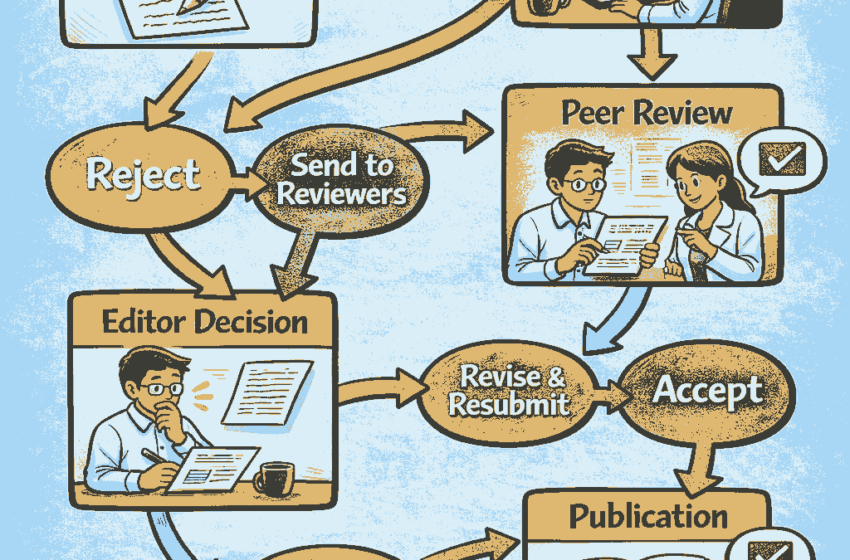
As you submit the paper to a journal, the editor looks at it first to check that it fits the topic area and follows the formatting rules of their publication. If your research paper clears this initial screening, it goes to a few experts who work in the same field, and they take their time studying your paper thoroughly.
This peer review is done confidentially, and the publishing researcher doesn’t know the identity of the expert reviewing their work. This eliminates bias in judgements. They’re asking whether the method makes sense, whether the data really supports what you’ve claimed, and whether you’ve added something that wasn’t already known. After that, the editor decides whether to accept the paper, send it back for changes, or reject it completely.
Why It Makes Research Better
Here’s the part authors tend to underrate. When you’ve lived with a paper for months, you can’t really see it anymore, because you know what you meant to say and your brain fills in whatever’s missing without telling you. A reviewer doesn’t have that problem. They’ll spot the jump in your argument, the figure in the table that nobody explains, or the limitation you were quietly hoping would go unnoticed.
It also saves you from trouble further down the line. Like if someone were to point out your errors and weak areas while your draft was still in an editing stage, you fix it there and then to avoid any rejections over it later. If the same problem turns up after publication, you might be looking at a correction notice with your name attached. Plenty of authors say that answering a confusing reviewer comment made the paper clearer in the end, since one expert getting lost usually means other readers would have too.
Where It Falls Short
I’d be misleading you if I said it always works well. Reviewers are busy people, so the quality of feedback varies a lot. One might write two vague lines, while another asks for an entire new experiment that has hardly anything to do with your research question. Bias can creep in too, sometimes towards well-known names or familiar methods, and a single round can drag on for months. None of this makes the system pointless, but it does mean you’re better off treating the comments as advice you can weigh up, rather than orders you have to follow.
Smart students connect with a reliable journal publication service to help choose a suitable journal, format the manuscript to the author guidelines, and handle the submission steps. They get an experienced professional’s guidance early on to eliminate any traces of week arguments and incorrect formatting.
How to Make Use of the Feedback
Read the comments twice, once while you’re still annoyed and once after a night’s sleep, because the second time they nearly always sound kinder. Then go through them and sort them roughly into the ones you agree with, the ones where the reviewer misunderstood something, and the ones you simply disagree with.
When you write the response letter, answer every point politely, including the ones you won’t act on, and back up your reasons with evidence. Editors tend to respond well to a calm, specific reply and badly to anything that sounds defensive. It also helps to give your draft to a colleague outside the project before you submit, since they’ll often find the confusing bits a journal reviewer would have found anyway.
Taking Professional Help Before Submission
Researchers or students who do not speak English as their first language or working without a big research group should consider taking expert help before they send anything in. A peer review service offered at the stage before submission works like a practice run, where an independent expert reads the manuscript and points out the weak spots early. It can’t replace the journal’s own review or promise acceptance, but it might spare you a rejection you didn’t need to get.
Conclusion
Peer review is slow, and sometimes it feels unfair. But it’s also free feedback from people who know your field, on a paper you can still improve. If you take the comments seriously, reply calmly, and fix what can be fixed, you’ll almost always end up with something stronger than what you first sent. So the next time those reviewer comments land in your inbox, try reading them as help rather than as a verdict.

How Peer Review Improves Research Quality: What Authors Should Know

Smart Student Recruitment Strategies for Colleges and Universities in a Competitive Education Market

Smart Game Booster Review: How to Improve FPS and Reduce Ping for Better Gaming

The 3 Carat Diamond, Explained: What the Weight Means, What It Costs and How to Buy One Well

Why is the Demand for Farm Equipment Loans Rising in Modern Agriculture

Beyond the Surgery: Understanding the Full Cost of Scoliosis Surgery in India

How to Maintain Your PC for Better Everyday Performance and Gaming

The Growing Role of SEBI CSCRF in Financial Data Protection

How Employer Of Record Services Help Startups Expand Into New Markets With Lower Operational Risk

What Most Homeowners Miss When Planning a Roof Replacement in Sacramento

Buying Property Through Your Super? Run an SMSF Loan Calculator Before You Call a Broker

How to Make Kofta Kebabs at Home Without Overthinking It

Press Release Distribution for Startups: A Practical Guide to Your First Announcement

NF Net Worth: How the Rapper Turned Pain Into Millions

Michele Morrone Net Worth: His Salary, Earnings, and Rich Life

Naomi Burton-Crews: The Heartwarming Story of Terry Crews’ Eldest Child

How Interactive Step-by-Step Guides Make Tech Easier to Learn

Innovations in Floristry: BOPP Matte Film as the Go-To Material for Modern Flower Packaging

Inside the Obsession With Chrome Hearts and CDG

Hi3D: Accelerating Creative Prototyping with AI-Powered 3D Design
How Peer Review Improves Research Quality: What Authors Should Know
Smart Student Recruitment Strategies for Colleges and Universities in a Competitive Education Market
Smart Game Booster Review: How to Improve FPS and Reduce Ping for Better Gaming
The 3 Carat Diamond, Explained: What the Weight Means, What It Costs and How to Buy One Well
Why is the Demand for Farm Equipment Loans Rising in Modern Agriculture
Beyond the Surgery: Understanding the Full Cost of Scoliosis Surgery in India
How to Maintain Your PC for Better Everyday Performance and Gaming
The Growing Role of SEBI CSCRF in Financial Data Protection
How Employer Of Record Services Help Startups Expand Into New Markets With Lower Operational Risk
What Most Homeowners Miss When Planning a Roof Replacement in Sacramento
-

 News2 months ago
Who Is Gigi Yallouz? Meet Owain Yeoman’s Wife and Jewelry Designer
-

 News2 months ago
Who Is Tove Torvalds? All About Linus Torvalds’ Wife
-

 News2 months ago
Rajesh Nihalani: What We Know About Archie Panjabi’s Husband
-

 News3 months ago
Stephan Farmiga: Everything to Know About Vera Farmiga’s Brother