
Blog
Sammying: How It Works and Why It Is Important

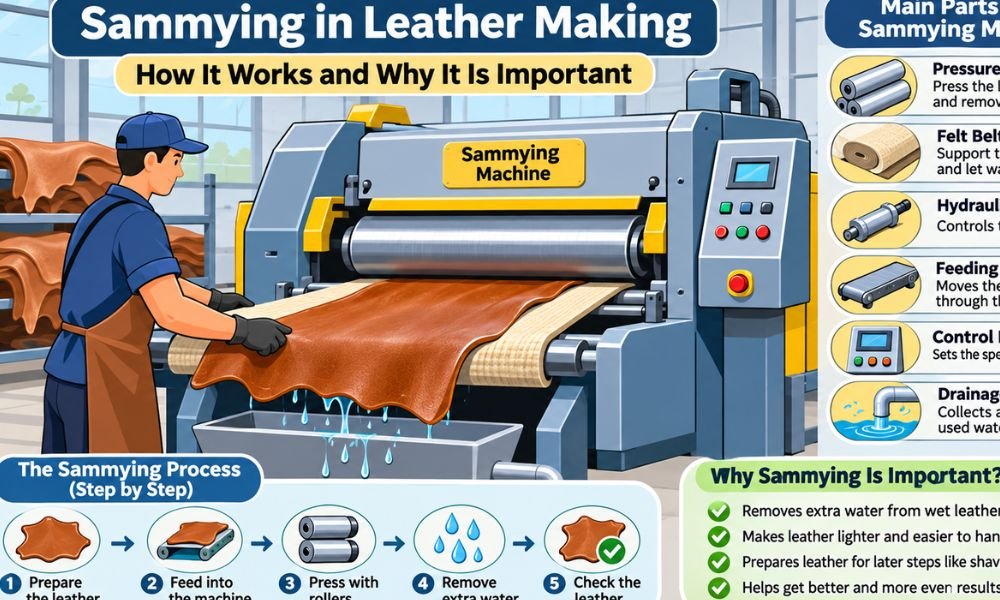
Have you ever thought about how wet animal skin turns into leather? It takes many steps to make leather ready for use. One key step is called sammying. It helps remove extra water from wet leather.
Freshly tanned leather holds a lot of water. This makes it heavy and hard to handle. Workers use a special machine to press out some of that water. The leather stays soft and wet enough for more work.
In this guide we will explain what sammying means and how it works. We will also look at the machines used in this process. You will learn why this step is so important in leather making.
What Is Sammying?
Sammying is a process that removes extra water from wet leather. It is used in leather factories called tanneries. The process uses strong rollers to press the leather and push out water without making it fully dry.
After tanning the leather still holds a lot of water. Workers need to remove some of it before the next steps. Sammying helps them do this in a fast and controlled way while keeping the leather soft.
This process is also known as samming or samming-out. It is often used after tanning and before steps like splitting or shaving. Some factories also use it again after adding color and oils to leather.
How Does the Sammying Process Work?
The sammying process may look simple. Yet each step needs care. Workers must place the leather in the right way and set the machine with care. This helps remove water without leaving marks on the leather.
First workers check the wet leather for folds. They then place it on a feeding table or moving belt. The machine pulls the leather between strong rollers. These rollers press out extra water as the leather moves through.
Special felt belts help hold the leather and let water drain away. The used water flows into a drain system. After this the leather comes out with less water. Workers check it before sending it to the next step.
Continue reading: How to Prepare Outdoor Surfaces Before Painting Using Pressure Washers
Why Is Sammying Important in Leather Making?
Sammying is important because wet leather can be very heavy. Too much water can make it hard to move and work with. Removing extra water helps workers handle the leather and get it ready for more work.
Think about a wet towel. It feels heavy because it holds water. When you squeeze it the towel becomes lighter. Sammying works in a similar way. The machine removes water but does not make the leather fully dry.
Good sammying also helps keep moisture more even. This can make later steps easier. It may also reduce the amount of water that must be removed during drying. The results depend on the machine and leather type.
Main Parts of a Sammying Machine
A sammying machine has several parts that work together. Each part has its own job. Some parts press the leather while others help move it. The machine also needs a way to collect the water it removes.
The pressure rollers do the main work. They squeeze extra water from the leather. Felt belts help support the leather and let water drain. Many machines also use a hydraulic system to control how hard the rollers press.
The feeding system moves leather through the machine. A control panel helps workers set the speed and pressure. The drainage system takes away used water. All these parts must work well to help protect the leather.
Continue reading: BacktoFrontShow: What Is It and How Does It Work?
Different Types of Sammying Machines
Not every tannery uses the same sammying machine. Some factories work with large cowhides. Others use smaller sheep or goat skins. The right machine depends on the size of the leather and how much work is done.
A through-feed sammying machine moves leather through its rollers in one steady path. It is useful for factories that handle many hides. Some models let workers change the speed and pressure to suit different types of leather.
Other machines combine sammying with setting out. This means they remove water and help flatten the leather in one step. Smaller machines are also used for narrow skins. Each type has its own use and benefits.
Sammying vs. Drying: What Is the Difference?
Sammying and drying both remove water from leather. But they do not work in the same way. Sammying uses pressure to squeeze out extra water. Drying removes more water through methods such as air or heat.
After sammying the leather still feels wet and soft. This is normal because it needs some moisture for later work. Drying comes at another stage when workers need to remove more water from the leather.
There are other steps too. Setting out helps spread and flatten wet leather. Shaving removes material to make leather the right thickness. Each step has a different job. Sammying helps prepare the leather for these tasks.
Sammying has many benefits in leather making. It removes extra water and makes wet leather easier to handle. This helps workers move heavy hides from one place to another. It also gets the leather ready for more work.
Another benefit is better moisture control. When leather holds too much water it can be hard to cut or shave well. Removing extra water helps workers get more steady results. This can also reduce problems during later steps.
Sammying may also help save time and energy. Leather with less water may need less work during drying. But the savings depend on the factory and its machines. Good settings help workers get better results with less waste.
What Affects the Sammying Process?
Many things can change how well sammying works. One key factor is leather thickness. Thick cowhide may need different machine settings than thin sheep or goat skin. Workers must check the leather before they start the process.
Roller pressure is also very important. Too little pressure may leave extra water in the leather. Too much pressure can cause marks or damage. Workers need to find the right setting for each type of leather.
Machine speed and felt belts also matter. If leather moves too fast it may not lose enough water. Dirty or worn belts can cause poor results. The amount of water already in the leather can also change the outcome.
Common Sammying Problems and How to Fix Them
Sometimes leather comes out of the machine with wet spots. This can happen when the rollers press unevenly or the felt belts are worn. Workers should check how the leather enters the machine and look for damaged parts.
Another common problem is roller marks. These marks may appear when pressure is too high or the rollers are dirty. Workers should clean and check the machine. They should also use settings that suit the leather type.
Wrinkles and folds can also form during sammying. This often happens when leather enters the machine in the wrong position. Too much water may remain if the pressure is low or drainage is poor. Finding the cause helps prevent the problem.
How to Check Sammying Results
Workers can check sammying results by weighing leather before and after the process. This is a simple way to see how much weight it has lost. Most of this change comes from the extra liquid removed by the machine.
For example a wet hide may weigh 25 kg before sammying. After passing through the machine it may weigh 22 kg. This means it has lost 3 kg or 12% of its first weight. It does not mean only 12% water remains.
Workers can also test moisture in leather samples. They should check the middle and edges of each hide. This helps them find wet spots. Keeping notes about machine speed and pressure can also help improve future results.
Sammying Machine Care and Safety
A sammying machine needs regular care to work well. Workers should check the rollers and felt belts for dirt or damage. They should also keep the water drains clean. This helps the machine remove water in a steady way.
Safety is just as important as machine care. Strong rollers can badly hurt hands or fingers. Workers must keep their hands away from moving parts. Safety guards should stay in place. Only trained people should use the machine.
Before cleaning or fixing the machine workers must turn it off and follow the proper safety steps. The power must be locked out so it cannot start by mistake. Used water must also be collected and treated safely because it may hold tanning chemicals.
How to Choose the Right Sammying Machine
Choosing the right machine starts with knowing what type of leather a factory makes. Large cowhides need enough working space. Smaller skins may fit a narrow machine. The machine should also handle the amount of leather made each day.
A good machine should let workers control speed and pressure. This is helpful when working with different leather types. Buyers should also check safety guards and how easy it is to clean or replace worn parts.
Price is another key point. A cheap machine may cost more over time if it needs many repairs. Buyers should think about power use and spare parts too. Good support from the seller can help keep the machine working well.
Conclusion
Sammying is an important part of leather making. It helps remove extra water from wet leather without making it fully dry. This makes leather easier to handle and prepares it for the next steps in the factory.
The process works best when workers use the right machine settings. Good rollers and clean felt belts help remove water in a steady way. Regular checks can also help prevent marks and other damage to the leather.
In 2026 sammying remains a useful step in many tanneries. It can help workers save time and keep production more steady. With proper machine care and safe work methods it supports better leather processing from start to finish.
(FAQs)
What is sammying in leather making?
Sammying is a process that removes extra water from wet leather. It uses a special machine with strong rollers. The rollers press the leather and push water out.
This makes the leather lighter and easier to handle. It also helps prepare the leather for the next steps. The leather stays soft and does not become fully dry.
Why is sammying important in leather production?
Sammying is important because wet leather holds a lot of water. This makes it heavy and hard to work with. Removing extra water helps workers move and handle the leather.
It also helps prepare leather for cutting and shaving. Good sammying can make later work easier and help keep results more even.
How does a sammying machine work?
A sammying machine uses strong rollers to squeeze water from wet leather. Workers place the leather on a feeding table. The machine then pulls it between the rollers.
Felt belts help support the leather and let water drain away. The leather comes out with less water. Workers then check it before moving to the next step.
What is the difference between sammying and drying?
Sammying and drying both remove water from leather. But they use different methods. Sammying uses pressure to squeeze out water. Drying removes more water through air or heat.
After sammying the leather still holds moisture. It stays soft and ready for more work. Drying is used later when the leather needs to lose more water.
Can sammying damage leather?
Yes. Sammying can damage leather if the machine is not used the right way. Too much roller pressure may leave marks on the surface. Poor feeding can also cause folds and wrinkles.
Workers can lower these risks by using the right settings. They should also check the rollers and felt belts. Clean machines and careful handling help protect the leather.
What types of leather can be used in sammying?
Sammying can be used on many types of wet leather. These include cowhide and sheep or goat skins. Each type has a different thickness and needs proper care.
Thick leather may need different pressure than thin leather. Workers must choose settings that suit the material. This helps remove extra water without causing damage.
How much water does sammying remove from leather?
The amount of water removed depends on the leather type and machine settings. Very wet leather may lose more water than leather that has already drained. There is no fixed amount for every hide.
For example a hide may weigh 25 kg before sammying and 22 kg after. This means its weight has dropped by 12%. It does not mean the leather has only 12% water left.
What are the most common sammying problems?
Common problems include wet spots and roller marks. Wrinkles and folds may also appear. These problems can happen when the leather enters the machine poorly or the pressure is not right.
Dirty or worn felt belts can also affect the results. Workers should check the machine and leather often. Finding problems early can help prevent more damage.
How do you choose the best sammying machine?
The best machine depends on the type and size of leather being made. Large cowhides need a machine with enough working width. Smaller skins may need less space.
Buyers should look for good pressure and speed controls. Safety guards and easy cleaning are also important. They should check repair costs and spare parts before buying a machine.
Does sammying help save time and energy?
Yes. Sammying can help save time by removing extra water before later work begins. Leather with less water is often easier to move and handle. This may help workers finish some tasks faster.
It may also reduce the amount of water that needs to be removed during drying. This can save energy in some factories. The actual savings depend on the leather type and machines used.
Continue reading:Dentiloquent: Why Do People Speak Through Their Teeth?

Direct to Film Printing: Planning Production, Managing Quality, and Choosing the Right Workflow

How Peer Review Improves Research Quality: What Authors Should Know

Smart Student Recruitment Strategies for Colleges and Universities in a Competitive Education Market

Smart Game Booster Review: How to Improve FPS and Reduce Ping for Better Gaming

The 3 Carat Diamond, Explained: What the Weight Means, What It Costs and How to Buy One Well

Why is the Demand for Farm Equipment Loans Rising in Modern Agriculture

Beyond the Surgery: Understanding the Full Cost of Scoliosis Surgery in India

How to Maintain Your PC for Better Everyday Performance and Gaming

Inurl:Spatial: What It Means and How to Use It

Sammying: How It Works and Why It Is Important

Buying Property Through Your Super? Run an SMSF Loan Calculator Before You Call a Broker

How to Make Kofta Kebabs at Home Without Overthinking It

NF Net Worth: How the Rapper Turned Pain Into Millions

Press Release Distribution for Startups: A Practical Guide to Your First Announcement

Michele Morrone Net Worth: His Salary, Earnings, and Rich Life

Naomi Burton-Crews: The Heartwarming Story of Terry Crews’ Eldest Child

Innovations in Floristry: BOPP Matte Film as the Go-To Material for Modern Flower Packaging

Inside the Obsession With Chrome Hearts and CDG

How Interactive Step-by-Step Guides Make Tech Easier to Learn

Hi3D: Accelerating Creative Prototyping with AI-Powered 3D Design
Direct to Film Printing: Planning Production, Managing Quality, and Choosing the Right Workflow
How Peer Review Improves Research Quality: What Authors Should Know
Smart Student Recruitment Strategies for Colleges and Universities in a Competitive Education Market
Smart Game Booster Review: How to Improve FPS and Reduce Ping for Better Gaming
The 3 Carat Diamond, Explained: What the Weight Means, What It Costs and How to Buy One Well
Why is the Demand for Farm Equipment Loans Rising in Modern Agriculture
Beyond the Surgery: Understanding the Full Cost of Scoliosis Surgery in India
How to Maintain Your PC for Better Everyday Performance and Gaming
Inurl:Spatial: What It Means and How to Use It
Sammying: How It Works and Why It Is Important
-

 News2 months ago
Who Is Gigi Yallouz? Meet Owain Yeoman’s Wife and Jewelry Designer
-

 News2 months ago
Who Is Tove Torvalds? All About Linus Torvalds’ Wife
-

 News2 months ago
Rajesh Nihalani: What We Know About Archie Panjabi’s Husband
-

 News3 months ago
Stephan Farmiga: Everything to Know About Vera Farmiga’s Brother