
Blog
Inurl:Spatial: What It Means and How to Use It

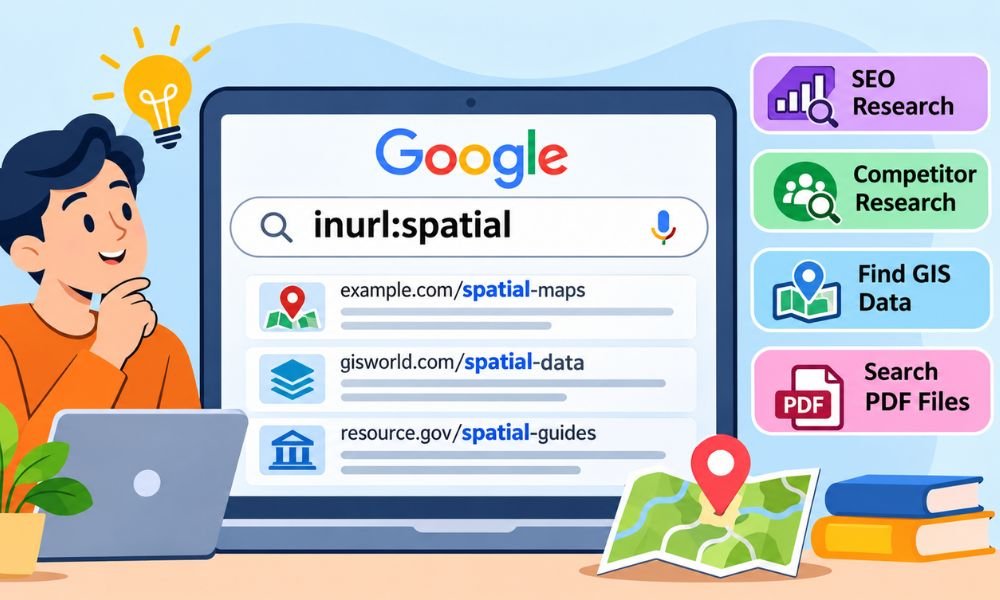
Have you ever searched on Google and found too many pages? Some pages may not have what you need. This can waste your time. But what if you could make your search more clear with one simple trick?
That is where inurl:spatial can help. It is a search command that helps you find web pages with the word “spatial” in their web address. You can use it to find useful sites and learn about new topics.
In this guide for 2026 we will explain what inurl:spatial means and how it works. You will also learn how to use it on Google. We will share easy search tips and real examples to help you get started.
What Is Inurl:Spatial?
Inurl:spatial is a search command that helps you find web pages with the word “spatial” in their URL. A URL is the web address you see at the top of your browser. Each page has its own web address.
The command has two parts. The first part is inurl: which tells Google to look at web addresses. The second part is spatial which is the word you want to find. Both parts work together to help narrow your search.
For example you may find a page with an address like example.com/spatial-data. This address has the word “spatial” in it. But the command does not mean every result is about maps. Some pages may cover sound or design.
Continue reading: Smart Game Booster Review: How to Improve FPS and Reduce Ping for Better Gaming
How Does Inurl:Spatial Work?
Google looks at many things when you search. These include page titles and web addresses. The inurl:spatial command asks Google to focus on web addresses that contain the word “spatial”. This helps you find pages with that word in their URL.
To use it you must type the command in the right way. Write inurl:spatial without any space after the colon. If you add a space the search may not work as you expect.
Here are three simple examples of web addresses that contain the word:
-
example.com/spatial -
example.com/spatial-maps -
example.com/guides/spatial-data
Each address has the word “spatial” in a different place. Google may show these pages when you use the command. Still it does not promise to show every page that has this word.
How to Use Inurl:Spatial on Google
Using inurl:spatial is easy. You do not need special tools or paid software. All you need is a browser and Google Search. Even if you are new to search commands you can learn this in a few minutes.
Start by opening Google on your phone or computer. Click the search box and type inurl:spatial. Then press Enter. Google will show search results that may have the word “spatial” in their web addresses.
Now look at the results and open a page that seems useful. If you want pages about maps you can add the word GIS. Your new search will be inurl:spatial GIS. This helps Google focus on the kind of pages you want.
Why Is Inurl:Spatial Useful?
The internet has millions of pages. Finding the right one can take time. Inurl:spatial helps you narrow your search by looking for one word in web addresses. This can make it easier to find pages about a topic.
For example a student may need facts about spatial data for a school task. Instead of searching through many pages the student can use this command with words like GIS or maps. This may help them find useful guides.
Website owners can also use this trick. They can look for pages on other websites and learn how those sites cover a topic. But remember that a matching URL does not always mean the page has good or correct information.
Continue reading: Oleksandra Zelenska: Who Is Volodymyr Zelensky’s Daughter?
Best Inurl:Spatial Search Examples
One of the best things about inurl:spatial is that you can add more words to your search. This helps you look for a clear topic. You can start with a simple search and change it based on what you need.
For example if you want to learn about GIS you can type inurl:spatial GIS. If you need guides about PostGIS you can try inurl:spatial PostGIS. These searches may help you find pages about maps and spatial data.
You can also use other Google search commands with it. Here are some useful examples that you can try in 2026.
| Search Command | What It Helps You Find |
|---|---|
inurl:spatial |
Pages with spatial in the URL |
inurl:spatial GIS |
GIS guides and resources |
inurl:spatial PostGIS |
PostGIS learning pages |
inurl:spatial filetype:pdf |
PDF files about spatial topics |
inurl:spatial -audio |
Results without the word audio |
inurl:spatial site:edu |
Pages from education sites |
inurl:spatial after:2025-01-01 |
Results with newer date signals |
These examples show how one small command can help with many searches. You can add a word or remove one to see how the results change. Always open the page and check its details before you use the information.
How Inurl:Spatial Helps With SEO
SEO helps websites appear in Google search results. Website owners use many tools to learn what people search for. One useful search trick is inurl:spatial. It helps them find pages that have the word “spatial” in their web addresses.
For example a website owner may write about maps and location data. They can use this command to find other pages about the same topic. This may give them new ideas for guides and helpful posts.
But this search trick does not make a website rank higher on Google. It only helps people find and study pages. Good content and a clear website still matter. The best goal is to help readers find what they need.
Using Inurl:Spatial for Competitor Research
Have you ever wanted to see how another website covers a topic? Inurl:spatial can help with that. You can search for pages on one website and learn how its content is set up. This is useful for people who run blogs.
For example you can type site:example.com inurl:spatial into Google. This asks Google to look for pages on that site with “spatial” in their web addresses. You may find guides and topic pages that give you ideas.
You can also look for topics that other websites have not explained well. Maybe they have a short guide but no clear examples. You could write a better guide that answers more questions. Just remember that Google may not show every page on that site.
How Inurl:Spatial Helps Find GIS Data
GIS stands for Geographic Information System. It helps people work with maps and place-based data. Schools and researchers use GIS to study land and roads. It can also help them learn about rivers and changes in the world.
The inurl:spatial command can help people find GIS guides and learning pages. For example you can search inurl:spatial GIS data quality. You may find pages that explain how map data is made and checked.
You can also try inurl:spatial site:gov filetype:pdf to look for government PDF files. But not every result will be useful. Check who made the file and when it was last changed. Also check where the data came from and if you can use it.
Inurl:Spatial vs Other Google Search Commands
Google has several search commands that help people find pages. Each one works in a different way. Inurl:spatial looks for a word in a web address. Other commands can help you search one website or find a certain file type.
For example site: helps you search within a website. The intitle: command looks for words in page titles. The filetype: command helps you find files such as PDFs. You can use these commands alone or with other search words.
Here is a simple table to help you see the difference.
| Search Command | What It Does |
|---|---|
inurl:spatial |
Finds URLs with spatial |
site:example.com |
Searches one website |
intitle:spatial |
Looks for spatial in page titles |
filetype:pdf |
Finds PDF files |
"spatial data" |
Searches for a phrase |
spatial -audio |
Leaves out audio results |
after:2025-01-01 |
Narrows results by date |
These commands can make your searches more clear. But using too many at once may hide useful pages. Start with one command and add more words only when needed.
Common Inurl:Spatial Mistakes to Avoid
One common mistake is typing the command with a space after the colon. The correct way is inurl:spatial. If you type inurl: spatial Google may read it in a different way. This can change the results you see.
Another mistake is thinking every result is about maps or GIS. The word “spatial” can also appear on pages about sound and design. A matching web address does not always mean the page has the facts you want.
Some people also think Google will show every matching page. That is not true. Search results can change over time. You should not use the result count as proof of how many pages a website has. It is better to check each useful result.
Benefits and Limits of Inurl:Spatial
One main benefit of inurl:spatial is that it can make online research easier. You can use it to find topic pages and PDF files. It can also help you study how websites name their pages and folders.
The word “spatial” can appear in many parts of a web address. It may be in the site name or a folder. It can also be in a page name or file name. Some web addresses even use it after a question mark as part of a search setting.
But this command has limits. It cannot tell you if a page is true or safe to trust. It also cannot show how popular a topic is. If you own a website you can use Google Search Console to check your own pages in more detail.
Conclusion
Inurl:spatial is a simple search trick that can help you find web pages with the word “spatial” in their addresses. It is easy to use and does not need any special software. You can try it on Google in just a few steps.
It can help students find GIS guides and help website owners study other sites. It is also useful for finding PDF files and new content ideas. Adding clear search words can help you get results that better match your needs.
The best way to use inurl:spatial is to start with a simple search. Then add more words if you need to. Always check the pages you find before trusting their facts. This small habit can make your online research much more useful.
(FAQs)
What is Inurl:Spatial and what does it mean?
Inurl:spatial is a Google search command. It helps you find web pages that have the word “spatial” in their web addresses. People use it to find useful websites and learn about maps or location data. It can also help with SEO research.
How do I use Inurl:Spatial on Google?
Open Google and type inurl:spatial in the search box. Then press Enter to see the results. You can add words like GIS or maps to make your search more clear. Always check the pages you find to make sure they have what you need.
Is Inurl:Spatial free to use?
Yes. You can use inurl:spatial for free on Google. You do not need to buy any tool or create a special account. Just open Google and enter the command. It works on phones and computers with an internet connection.
Can Inurl:Spatial help improve SEO rankings?
Inurl:spatial does not improve Google rankings by itself. But it can help website owners study other websites. They can find useful pages and learn what topics others cover. This may help them plan better content that answers readers’ questions.
Can Inurl:Spatial find hidden web pages?
Inurl:spatial may help you find public pages that are hard to spot in a normal search. But it cannot open private pages or locked files. It also cannot find every page on the internet. It only helps narrow the search results Google can show.
What is the difference between Inurl:Spatial and Site:?
Inurl:spatial looks for the word “spatial” in web addresses. The site: command helps you search within one website or domain. You can use both together. For example site:example.com inurl:spatial looks for matching pages on that website.
Can Inurl:Spatial help find GIS maps and data?
Yes. You can use inurl:spatial to look for GIS guides and map data pages. Try searching inurl:spatial GIS or inurl:spatial maps. These searches may show useful learning sites. Always check the source and date before using any map data.
Why does Inurl:Spatial show unrelated results?
The word “spatial” has many uses. It can relate to maps and land. It can also relate to sound or design. Google looks for the word in web addresses. This means some results may not match your topic. Adding more search words can help.
Does Inurl:Spatial show every page with the word spatial?
No. Google does not promise to show every matching page. Some pages may not be in its search results. Others may be left out for different reasons. The results can also change over time. Use this command as a search aid rather than a full list.
Is Inurl:Spatial still useful in 2026?
Yes. Inurl:spatial can still be a useful search trick in 2026. Students can use it to find learning pages. Website owners can use it for SEO research. It can also help people find PDF files and GIS guides. Just remember to check each result before trusting it.
Continue reading: RN Fundamentals 2016: What Every Nursing Student Needs to Know

Direct to Film Printing: Planning Production, Managing Quality, and Choosing the Right Workflow

How Peer Review Improves Research Quality: What Authors Should Know

Smart Student Recruitment Strategies for Colleges and Universities in a Competitive Education Market

Smart Game Booster Review: How to Improve FPS and Reduce Ping for Better Gaming

The 3 Carat Diamond, Explained: What the Weight Means, What It Costs and How to Buy One Well

Why is the Demand for Farm Equipment Loans Rising in Modern Agriculture

Beyond the Surgery: Understanding the Full Cost of Scoliosis Surgery in India

How to Maintain Your PC for Better Everyday Performance and Gaming

Inurl:Spatial: What It Means and How to Use It

Sammying: How It Works and Why It Is Important

Buying Property Through Your Super? Run an SMSF Loan Calculator Before You Call a Broker

How to Make Kofta Kebabs at Home Without Overthinking It

NF Net Worth: How the Rapper Turned Pain Into Millions

Press Release Distribution for Startups: A Practical Guide to Your First Announcement

Michele Morrone Net Worth: His Salary, Earnings, and Rich Life

Naomi Burton-Crews: The Heartwarming Story of Terry Crews’ Eldest Child

Innovations in Floristry: BOPP Matte Film as the Go-To Material for Modern Flower Packaging

Inside the Obsession With Chrome Hearts and CDG

How Interactive Step-by-Step Guides Make Tech Easier to Learn

Hi3D: Accelerating Creative Prototyping with AI-Powered 3D Design
Direct to Film Printing: Planning Production, Managing Quality, and Choosing the Right Workflow
How Peer Review Improves Research Quality: What Authors Should Know
Smart Student Recruitment Strategies for Colleges and Universities in a Competitive Education Market
Smart Game Booster Review: How to Improve FPS and Reduce Ping for Better Gaming
The 3 Carat Diamond, Explained: What the Weight Means, What It Costs and How to Buy One Well
Why is the Demand for Farm Equipment Loans Rising in Modern Agriculture
Beyond the Surgery: Understanding the Full Cost of Scoliosis Surgery in India
How to Maintain Your PC for Better Everyday Performance and Gaming
Inurl:Spatial: What It Means and How to Use It
Sammying: How It Works and Why It Is Important
-

 News2 months ago
Who Is Gigi Yallouz? Meet Owain Yeoman’s Wife and Jewelry Designer
-

 News2 months ago
Who Is Tove Torvalds? All About Linus Torvalds’ Wife
-

 News2 months ago
Rajesh Nihalani: What We Know About Archie Panjabi’s Husband
-

 News3 months ago
Stephan Farmiga: Everything to Know About Vera Farmiga’s Brother