Blog
Why 12mm Tempered Glass Is a Popular Choice for Railing Systems

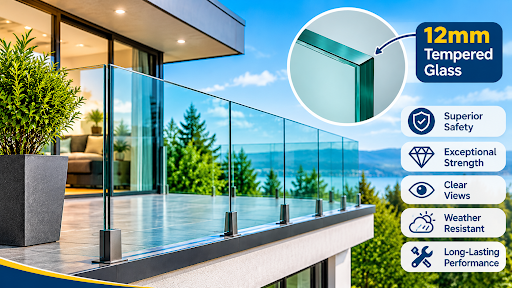
Glass railings have become a popular feature in contemporary residential and commercial architecture. From spacious balconies to outdoor decks and interior staircases, they offer a clean appearance while allowing natural light and surrounding views to remain visible. However, the quality of a railing system depends on more than its overall design. Glass thickness, material properties, and hardware compatibility also play important roles.
Among the available options, 12mm tempered glass for railings is frequently considered for applications that require a balance of structural performance and modern aesthetics.
Quick Answer: 12mm tempered glass is a popular option for railing systems because it combines the benefits of heat-treated safety glass with a substantial panel thickness and a clean architectural appearance. Its suitability depends on panel dimensions, support conditions, installation methods, and applicable building requirements.
Understanding what makes this glass thickness suitable for different projects can help homeowners, contractors, and builders make more informed decisions.
What Makes 12mm Tempered Glass Different?
Tempered glass is manufactured through a controlled heating and rapid cooling process. This treatment changes the internal stress distribution of the glass, making it stronger than ordinary annealed glass of comparable thickness.
When broken, tempered glass generally breaks into smaller, relatively blunt fragments rather than large, sharp pieces. This is one reason it is widely used in applications where safety glazing is required.
The 12mm specification refers to the thickness of the glass panel. It provides a substantial glass profile that can be incorporated into various railing configurations.
Several characteristics make this option worth considering:
- Heat-treated construction: Tempering improves the mechanical strength of the glass compared with ordinary annealed glass.
- Substantial panel thickness: A 12mm panel offers a solid glass profile for suitable railing applications.
- Contemporary appearance: Clear glass maintains an open and minimal architectural look.
- Versatile applications: It can be considered for different residential and commercial railing designs when properly specified.
However, glass thickness alone does not determine whether a railing system is structurally suitable. The complete assembly must meet the project’s performance requirements.
Where 12mm Tempered Glass Panels Make a Difference
The versatility of 12mm tempered glass panels makes them an option for several architectural settings. Their application depends on the design, supporting structure, and relevant safety standards.
Balcony Railings That Preserve Outdoor Views
Balconies are among the most common locations where glass railing systems are installed. Traditional railing materials can visually interrupt surrounding views, whereas transparent glass creates a more open appearance.
12mm glass railing panels can be considered for balcony projects where a substantial glass profile and contemporary finish are desired.
They also allow natural light to pass through, helping balconies feel more connected to the surrounding outdoor environment.
Outdoor Decks with a Contemporary Finish
Deck areas often serve as extensions of indoor living spaces. Glass railings can help maintain visual continuity between the deck and its surroundings.
When selecting glass for an outdoor installation, factors such as wind exposure, mounting conditions, panel dimensions, and hardware materials must be evaluated.
The right combination of glass panels and compatible fittings helps create a cohesive railing design.
Interior Staircases and Open Spaces
Glass railings are also widely used in modern staircases. Their transparent appearance can make interior spaces feel brighter and less enclosed.
Depending on the staircase layout, 12mm tempered glass may be considered alongside suitable brackets, clamps, handrails, and other supporting hardware.
Angled installations require particular attention to panel measurements and connection details.
Understanding Glass Railing Panel Thickness
Choosing the correct glass thickness is an important part of railing design. Different projects have different structural demands, so the same specification may not be appropriate for every installation.
Glass railing panel thickness should be evaluated alongside several factors:
➤ Panel dimensions: Larger glass panels may experience different loading conditions compared with smaller sections.
➤ Support configuration: Frameless, semi-frameless, and post-supported systems distribute loads differently.
➤ Installation location: Balconies, decks, staircases, and commercial spaces have different requirements.
➤ Environmental exposure: Outdoor installations may need to account for wind loads, temperature variations, and other environmental conditions.
➤ Applicable regulations: Local building codes establish requirements for railing height, loading, glass specifications, and safety glazing.
For these reasons, 12mm tempered glass should not automatically be considered suitable for every railing project. Professional assessment is important when determining the correct specification.
How 12mm Glass Works with Frameless Railing Systems
One of the appealing applications of 12mm glass railing panels is their use in frameless glass railing systems.
These systems are designed to minimize visible supporting structures, allowing the glass to become the main visual feature. Depending on the design, panels may be secured using base-mounted spigots, approved clamps, or other engineered mounting arrangements.
The supporting hardware plays a significant role in the complete installation.
For example:
- Glass spigots: Help secure panels at the base in compatible frameless configurations.
- Glass clamps: Provide connections between glass panels and supporting structures.
- Mounting brackets: Support specific panel or handrail connection arrangements.
- Handrail fittings: Connect compatible handrails to the railing assembly where required.
Not every hardware component is suitable for every glass thickness. Compatibility with the panel specification and the complete system design should always be verified.
Maintaining Glass Railing Strength and Durability
Glass railing strength and durability depend on several interconnected elements, including the glass specification, hardware quality, installation workmanship, and ongoing maintenance.
Although tempered glass is designed to provide improved mechanical strength, its edges and surfaces still require proper handling. Damage, particularly to exposed edges, can affect the integrity of the panel.
A few maintenance practices can help preserve the appearance and condition of glass railing systems:
- Clean panels regularly using suitable glass cleaning products.
- Avoid abrasive materials that could scratch the surface.
- Inspect visible hardware and mounting connections periodically.
- Address signs of corrosion or damaged fittings.
- Follow the manufacturer’s maintenance recommendations.
Outdoor systems may require additional attention because of exposure to moisture, dust, pollution, and changing weather conditions.
Is 12mm Tempered Glass the Right Option for Your Project?
The answer depends on the intended application rather than thickness alone.
For homeowners planning a balcony renovation, 12mm tempered glass may be worth considering when the design calls for substantial glass panels and a contemporary finish. Contractors and builders should also evaluate the supporting structure, mounting arrangement, required loading performance, and applicable building regulations before finalizing a specification.
Working with compatible glass railing hardware is equally important. Even a high-quality glass panel needs an appropriately designed support system to perform as intended. RF Transparent offers glass railing solutions, tempered glass panels, and stainless steel hardware for modern residential and commercial projects. Exploring suitable panel and hardware combinations can help bring different railing designs together.
A Well-Specified Glass Railing Starts with the Right Materials
12mm tempered glass offers an appealing combination of modern aesthetics and practical material properties for many railing applications. However, selecting the right thickness is only one part of creating a suitable installation. Glass specifications, mounting hardware, structural support, and local safety requirements all need to work together.
With proper planning and compatible components, glass railing systems can become an attractive and functional feature of contemporary architecture.
Frequently Asked Questions
Why is 12mm tempered glass popular for railings?
It offers a combination of heat-treated glass strength, substantial panel thickness, and a modern transparent appearance. Its suitability depends on the railing design, support conditions, and project requirements.
Is 12mm tempered glass suitable for balcony railings?
It can be suitable for certain balcony railing applications when the panel dimensions, mounting system, structural requirements, and local building codes are properly considered.
What is the difference between 12mm tempered glass and regular glass?
Tempered glass undergoes controlled heating and rapid cooling, improving its mechanical strength compared with ordinary annealed glass of the same thickness. It also breaks differently when damaged.
Can 12mm glass be used in frameless glass railing systems?
Yes, 12mm glass can be used in certain frameless railing configurations. However, the mounting hardware, panel dimensions, and structural design must be compatible with the selected system.
Does thicker glass always mean a stronger railing system?
Not necessarily. Overall railing performance also depends on glass dimensions, support conditions, hardware, installation quality, and structural design.
What hardware is required for 12mm glass railing panels?
Depending on the system, installation may require compatible glass spigots, clamps, brackets, mounting fittings, and handrail connectors. Each component must be approved for the intended glass thickness and application.
How do you maintain 12mm tempered glass railing panels?
Regular cleaning with suitable glass cleaners, avoiding abrasive materials, and periodically inspecting mounting hardware can help maintain the system’s appearance and condition.

How to Start a Digital Marketing Agency in Los Angeles

Understanding the Importance of Professional HVAC Repair for Efficient and Comfortable Indoor Environments

Everything You Need to Know About Heat Pump Repair, Maintenance, and Long-Term System Efficiency

Achieving Broker Dealer Compliance Through Effective Risk Management

Basement Flooring in Canada: Moisture, Comfort and Material Choices

Human Behavior Is Integral to Personal Safety

Top 8 Grocery App Development Companies in USA

Why 12mm Tempered Glass Is a Popular Choice for Railing Systems

10 Things Dog Walkers in NYC Wish Every Dog Owner Knew

Hidden Damage: What Water Really Does to Your Home Before You Notice It

How to Make Kofta Kebabs at Home Without Overthinking It

Beyond the Interior: Home Improvements That Transform Your Entire Property

Building a Competitive Online Presence with Link Building Services and SEO Packages

Phoenix’s Construction Boom Is Changing How Workers, Drivers, and Businesses Share Urban Space

Spider Web Graphics in Fashion From Halloween to Streetwear

Cane Corso Kings: Everything You Need to Know About This Powerful Dog

Building Coherent Multi-Object Scenes Through Seeworld Spatial Planning

Electric Mini Bikes vs. Gas Mini Bikes: What Changes After You Buy?

How Employer Of Record Services Help Startups Expand Into New Markets With Lower Operational Risk

The Relationship Between Self-Confidence, Appearance, and Everyday Well-Being
How to Start a Digital Marketing Agency in Los Angeles
Understanding the Importance of Professional HVAC Repair for Efficient and Comfortable Indoor Environments
Everything You Need to Know About Heat Pump Repair, Maintenance, and Long-Term System Efficiency
Achieving Broker Dealer Compliance Through Effective Risk Management
Basement Flooring in Canada: Moisture, Comfort and Material Choices
Human Behavior Is Integral to Personal Safety
Top 8 Grocery App Development Companies in USA
Why 12mm Tempered Glass Is a Popular Choice for Railing Systems
10 Things Dog Walkers in NYC Wish Every Dog Owner Knew